Looking for Answers
(Autobiographical Philosophy)
This short book is for people who, from the many different belief systems, chose to take evolution as the process though which life came into existence. It is a mixture of travel stories and observations on how the ideas of evolution can be applied to everyday life.
I think one of the luckiest things that can happen to you in life is to be born to parents who don’t press upon you their beliefs. Children are left to work out their own thoughts. This was my position as my father died when I was too young to know him and my mother never revealed any of her religious thoughts to me. It is the people who have formed their own ideas that I find most interesting. For those who absorb without examination the local beliefs meaningful conversation can be difficult.
I grew up in Adelaide, South Australia, in a Mediterranean climate of olive and fig trees. I fished from the local jetties and had a early interest in science, particularly marine biology. Many of my relations were scientists working in biology, geology and engineering so I followed their lead and took a degree in engineering mathematics. This landed me a job in Melbourne with Rio Tinto, a large mining company. But I found life in the city dull so after a year I went to the company employment officer and asked what was available. He said there were two positions vacant, one in an iron ore mine in Western Australia and the other in a copper and gold mine on an island in Papua New Guinea. At certain points in your life you realise that a single decision will change completely the direction your life takes. I chose Papua New Guinea as I had already had an interest in diving and the idea of living on a tropical island surrounded by coral reefs seemed like paradise. So I will start my Journal in Papua New Guinea.
On arrival on the island of Bougainville I found that there were clubs for everything and new employees usually joined all those that took their interest. It was 1980 and television had not yet come to this corner of the world. People had to look to their own entertainment. But the island was exotic and people from the head office in Melbourne often made excuses to visit.
I had made a number of friends in Melbourne who worked for Rio Tinto and one, Peter, who was still stuck there and desperate for something exciting was coming up to Bougainville to see the mine operation. He told me he wanted adventure and I understood his need. Somehow he had got a company trip for a week to Bougainville. By chance, his trip coincided with two public holidays in Papua New Guinea. So we had five days to do something and so I asked around and there was a tramp ship going to some of the smaller outer islands surrounding Bougainville to collect the copra. It went every couple of months. This was the main income for these smaller islands and, as every island was covered with coconut trees, it was just a matter of husking and breaking the coconuts and putting the copra into hessian sacks. A small crane on the ship then hoisted these sacks into the hull.
Copra collecting produced only slim profits so the ships used were often near the end of their working life. On this rusty ship we were to sleep for four nights. There were several other local passengers as this was the main form of transport between islands. We put our gear in the two-bed cabin and the captain looked with a smile at the box of food we had brought but said nothing. No meals were served and you had to look after yourself. Transporting copra has its disadvantages in that the population of cockroaches on these ships is always enormous. As the ship had been empty for more than a week now, they were all starving. It was hot and humid below decks, the beds were uncomfortable, the ship rolled excessively, and so we slept badly. As well, there was a type of rustling that we couldn’t quite place. In the morning we found that the plastic bags holding bread and spaghetti and other foods were no obstacle to the cockroaches and all was gone except for the canned food. Fortunately, we did not feel like eating.
Our first stop was the Tasman Islands (now called Nukumanu Islands) where we arrived in the morning. We were to land on the main island and the captain found the gap in the reef that surrounded it and anchored. The island was a typical coral island with white beaches with an inner lagoon kept calm by the surrounding reefs. There was always the roar of the crashing surf on these outer reefs in the background. The island was covered in coconut trees and all the huts were made from the thatched leaves of this tree. There were lesser islands like a string of pearls in a half circle. While the loading of copra was going on we were free to roam. The Tasman islanders were of Polynesian origin and their language was close to the Samoan language. We were told there were about a thousand people living there. The arrival of the ship was the reason for a dance to which we were invited. This was the adventure that Peter was hoping for and he was enjoying every minute. However, as dusk fell and the dancing started the men and women were separated. Peter and I were led to where the men were. There was an islander here who worked at the mine and although I did not know him this connection brought us together. I asked why the separation of dancers and was told that the worst thing that that can happen to a young man was to see the menstruation blood of his sister. I told him that we wanted to see both dances and that I had no sisters here. Later we had a lengthy discussion about the religious beliefs of the Tasman Islanders. Of course Christianity came to the Pacific and while they called themselves Christian, they still kept most of their old beliefs.
Next was the Mortlock Islands (now called Takuu atoll). It had only half the number of people as the Tasman Islands. There was an anthropologist living there, a long time resident, who was working on their language and habits. I think he was from New Zealand. We had a chat and he was desperate for any newspapers. We had been told before leaving to take some for him and with these he seemed delighted. He had had no outside news for months so he was keen to bury himself in them.
We wandered around and the girls and young women of the island took a great interest in us as visitors were rare. They wore only a short grass skirt and some seemed to get shorter as the day went on. We were both twenty five years old. Like the Tasman islanders, these Mortlock islanders were also of Polynesian origin. Their wood carvings reminded me of similar ones I had seen in New Zealand. There were no toilets on the island but of the many beaches one was nominated as a toilet and people just wandered out and squatted in a few centimetres of water and used the same water for washing rather than toilet paper. I suppose that when you have a tiny population in a vast ocean, pollution does not matter.
We stayed two days here and were shown seven ways to cook the flesh of the coconut. One unusual method was to allow the bud of the coconut to grow with all the white internal flesh being absorbed and the shell now containing a soft spongy ball filling the whole coconut. This was then dried and ground into a type of flour. The other part of their diet was fish which were abundant. They also grew a few vegetables including paw paws which were used as a vegetable when green and a fruit when ripe. With the money they got from selling coconuts they bought other foods, mainly rice.
The ship was now full of copra and so it was time to return to Bougainville. This was about two hundred kilometres away and would take the whole night. We tried to get some sleep but in the middle of the night the boat slowed and there were people running about on deck. We went upstairs to investigate. We had gone over a “long line” and were entangled. These lines were kilometres long and this method of fishing was illegal. The captain, a weathered New Guinean, said after looking at the line and baits that it was a Taiwanese ship. As no light could be seen in any direction I suppose the captain decided that it was an opportunity to make some money. As it was only a few hours to Bougainville any fish caught would still be in good condition when we arrived and could be sold. The captain cut the line and the crew started hauling one of the halves. Every twenty metres there was a hook and on some were large tuna. Three tuna were soon landed and one must have been over a hundred kilos. It took four crew with gaffs to get it in.
Then all of a sudden a large searchlight came on a kilometre away. It seems the tables were turned and the Taiwanese ship had had its lights off stalking us whereas our ship was brilliantly lit. The captain now panicked. He knew these illegal fishing ships carried guns and could fire upon us. Now we turned off all the ship’s lights and steered by the white crests of the waves. The searchlight was going in all directions trying to find us. I admired the skill of the captain who seemed to be able to take the ship along the troughs of the waves and so I wondered if he had done this before. In the early morning light as we approached Bougainville I asked why he had not contacted a Papua New Guinea navy gunboat but he said that the nearest was in Lae some thousand kilometres away and others were being repaired. He said that in these vast oceans you are on your own.
The next day when I saw Peter off at the airport he told me that he had had enough adventure for a while and was looking forward to Melbourne.
Bougainville was an Island of about one hundred and twenty kilometres long and eighty wide. It is mountainous and covered with tropical jungle. Driving around the coast one came to white beaches and then black beaches. The white ones were from ground coral and the black from rivers that flowed through the island’s volcanic soils. The main beach was Loloho Beach and was of a fine white ground coral. It could be any beach on any tropical island. The mine had put a moored raft some thirty metres out for swimmers to rest on and here the water was very deep. There were the usual coral reefs left and right with myriads of coloured fish and the water was calm as more reefs further out, with their crashing waves, protected the bay. Around the beach was an old coconut plantation. This made Loloho a perfect place for gatherings of mine workers and for visitors on the weekends to snorkel. Near Loloho Beach was the Arawa Aquatic club with a balcony on poles projecting out to the sea with waves lapping underneath. Here we often played bridge and had gin and tonics late into the night. On the side of this clubhouse was a small shed with a compressor where dive club members could fill their tanks. Up to five tanks could be filled simultaneously and the facility was maintained by the mine. We (no one ever dived alone) sometimes did three or four dives per week and nearly always at night. Diving was popular and to join the dive club there was a small fee. The mine staff were mostly from Australia but also from other parts of the world and to relocate them to Papua New Guinea was expensive. The mine worked on the principle that if they keep their workers happy they would stay longer so all the various clubs were subsidised in one way or another by the mine.
I soon became settled into life in Papua New Guinea. I was living in Panguna in the mountains next to the mine where temperatures were mild. The couples and married people were in Arawa down on the coast and there it was hot and steamy with high humidity. These two towns were about twenty kilometres apart. Malaria was everywhere and we made a big effort to avoid being bitten by mosquitoes. The houses of Panguna and Arawa all had mosquito netting and there were few mosquitoes in the cooler climate of Panguna. But camping along the coast was a real risk and one had to be careful. Of course there were prophylactics but these had side effects and couldn’t be used for long periods. We used creams during the day and mosquito nets at night when camping.
In Arawa with the steamy climate I know of a couple who had their air-conditioner running continuously for their entire eight year stay. I actually stayed in this house for a few weeks once as it was customary to get a single person from the Panguna mine to “look after” a house if the residents went on holiday. This was for security reasons as no house could be left vacant as thefts were common. They warned me to “never turn off the air-conditioner” in very strong terms but did not give an explanation. They had a hairy dog and carpets and when two friends from Panguna joined me in the house for a few days they slept in the lounge room. They turned off the air-conditioner and the temperature went up about ten degrees. Years of accumulated flea eggs simultaneously hatched and we were so bitten that we had to turn the air-conditioner back on even colder than before to suppress them.
There were many local people working in the mine and some came from the various villages up and down the coast. Some of these mine workers became good friends and so now and again we were invited to stay in their villages. We would usually go only for the weekend and stay the Saturday night and drive back on Sunday afternoon. We needed to be at work on Monday. The huts were on poles and the walls were of woven coconut palm leaves. Sometimes we went with them fishing at night in their dugout canoes. Over time we got to know village life. The mine worker was the key that allowed us access to the village and we were always accepted.
A number of us had bought boats to explore the islands and reefs and find good diving and camping spots. I went halves in a boat with another mine worker. There were four smaller islands near Loloho beach, each a few acres and covered in coconut trees and all uninhabited and so good for camping. We would load the boat with as many spare diving tanks that we could borrow and camp on the Saturday night. For food we put out a small net which was full of fish within an hour or two and for drinks we had fresh coconut juice from the nuts that littered the ground.
I remember one trip to Myer’s reef some four kilometres offshore with four friends. It was a true reef and did not break the surface as even at high tide it was two meters below the waves. And waves there were aplenty as the reef interrupted the natural flow of water causing chop. Indeed, that was the method of finding the reef; look for the disturbance. The currents were strong and the reef was the top of an underwater mountain that fell away precipitously for hundreds of metres into the black depths. The reef was attractive because animals had to swim around or over it and by sitting on the edge, two or three meters down, holding on to chunks of coral, one could observe all the large fish coming up from the depths. Being so close to the surface, little air was used so we could stay for hours. The water temperature was twenty-eight degrees, and it was getting dark. We knew that the small aluminium boat would be straining at the anchor and I could see the face of Sven, who had made this dive before, and through his mask even he looked worried. The boat was not where we had left it. The anchor had shifted but luckily it had caught on another piece of coral at the edge of the reef. What we would have done had the boat had not been there I have no idea. A four kilometre swim in a sea full of sharks at night was not an attractive option. Mobile phones were yet to be invented and there was no rescue service anyway. But we were young and so I suppose we were more prone to taking risks.
Another night dive with strong currents was at Robo where there was a constriction between the mainland and a small island and the currents were strong. It was possible to start deep and travel with a lower current in one direction for twenty or thirty minutes and then for decompression come up to a different current a higher level and ride it all the way back to your starting point. When underwater at night there is no horizon so if you get disorientated there was the risk of being swept out to sea. There was no backup if anything went wrong so we took underwater compasses to guard against this disorientation. It was two o’clock in the morning and with no moon it was very dark and still. Leaving the landcruiser next to the ocean unattended for an hour or more was an invitation to theft and as security was poor in Papua New Guinea it was necessary to take a guard to protect the car. Joseph was almost retired and worked in security at the mine and he was always willing to come with us. He sat in the car while we dived. He was from mainland Papua New Guinea from a highland province and he carried a machete. During the drive we often quizzed him about highland life. He told us of the different tribes, their conflicts and their spiritual beliefs. He was born around nineteen twenty and as it was now nineteen eighty two he must have been over sixty. The last case of cannibalism was in about 1970 but as a child he had tasted humans. When there was warfare any enemies speared were sometimes eaten, why would you waste the meat? I could see sense in his arguments. Joseph watched us disappear quietly into the black sea. Decades later at a party in Australia I overheard some disparaging remarks about cannibalism and without thinking I interjected with “but some of my best friends were cannibals”. Everyone laughed and of course no one believed me. As I am writing this account more than thirty years later Joseph would be long dead by now, but his memory lives on in me today.
Between the outer coral reefs were strong currents. One channel was called shark alley and as the sides of the reefs were steep and with nowhere to anchor a drift dive was necessary. Here a heavy white marker was lowered from a boat and both boat and diver travelled at the same speed as the current. The idea was not to get too far from the marker otherwise you would be washed out to sea and when you surfaced there would be no boat in sight. All that was necessary was to sit in the water at about two or three metres down, keep an eye on the marker, and enjoy the hour or so that we had marked for this adventure. There is a certain exhilaration of being whisked along by a strong current. Sometimes you might see a sailfish or a school of tuna and, as well, the local sharks often used the alley. If a shark swims towards you front on it looks like a round disc that gets larger and larger. It’s not attacking but curious and you can be sure that when it is close it will suddenly turn side on and you see its full length. This can be a bit disconcerting at first but as we had all done many dives we were acclimatised to underwater life in the tropics.
The mine occasionally had visitors from overseas and that weekend we had Steve from England who was keen to do some diving. We were going out for a drift dive so we said “come along”. On the boat out he told us that he had done countless dives and considered himself an expert. He talked about using a “dry” suit where water does not get onto the body and that it was necessary for the cold European conditions. As Australians, we had never needed to use one. We listened to his stories. Maybe he was educating the colonials. As we got near the channel we started to talk of the dive plan. We said that anyone is free to return to the boat if they feel unwell. It was hard to get a word in. In frustration we told him just to follow us. We slipped over the side to the white marker hanging from the boat. The four of us were about ten metres ahead and after a few minutes I turned around to see where Steve was only to see him hauling himself back into the boat. We had forgotten to tell him about the sharks. We were all grinning on the boat trip back and Steve seemed unusually quiet. “That was a short dive Steve!” “I had a headache” he replied.
As a mathematician working in mine engineering, I was involved in most aspects of the mine operation. The job wasn’t special and similar work existed at any other mine. For me it was the location that was special. Most people who came to Bougainville wanted to see as much as possible in their short time working there. Some had two year contracts while others had commitments back in Australia. Time was precious. Weekdays were spent planning new adventures for the weekends, particularly long weekends. We had a few extra days so four of us got together to visit a small island called Buka Luma. This island sat in a channel between big Buka (the main island) and little Buka and the three islands together constituted “Bougainville”. The channel between the two Bukas is narrow and the old colonial hotel on Buka Luma has in the front a long green lawn which sloped away giving a fine view along the channel. On the lawn sat a single Japanese fighter plane, the Zero. This hotel had at various times been the administrative centre of Bougainville. Around its walls hang pictures of the original German colonists, then the British who followed, then the Japanese, followed by the Americans and then the Australians. The people who live here belong ethnically to the Solomon Islands and Bougainville, the northern most island group of the Solomons, should never have been made part of Papua New Guinea in the first place.
After a comfortable night in this hotel we hired a boat and snorkelled on some of the crashed Zeros that were in shallow water around the island. Both Islands, Big Buka and Little Buka, still had armoured tanks rusting on the sides of roads, triangular piles of ammunition, overgrown bunkers, various planes, etc., all left over from the Second World War. After snorkelling, we dived in the channel where the currents were quite strong. The direction of the current was dependent on the tides. We had a boat follow us as it is a poor dive plan that requires swimming against a current. After a couple of days on Buka Luma we went on to Little Buka, an island of about fifty kilometres by twenty. There was a Catholic Mission where it was possible to stay and we could use the phone at the hotel to tell of our coming. A small car ferry connected the islands. Just as we left the hotel on Buka Luma, we received the news that the priest was looking forward to our visit. We were a little worried as none of us were Christians and we hoped that the priest was not looking for converts. The roads were rough and often corrugated and there were frequent deep river crossings so travelling was hard on the Landcruiser. For some of the deeper rivers we had to take the bungs out of the floor so the car wouldn’t float away. The roads needed regular clearing as the tropical vegetation would soon reclaim them if there wasn’t some maintenance. But when we arrived at the Mission, the grounds were immaculate. Well kept lawns separated the buildings. Here nature was tamed. The jovial priest rushed towards us with hands out and beckoned us to the veranda of his house. Here we sat on comfortable lounge chairs made more comfortable after a few bottles of beer were produced. We spent a pleasant day there, leaving the next morning. We talked about politics, history, the weather, and almost everything except religion. The priest was the only European there and what he really wanted from us was good conversation. It made us realise how difficult it must be to go to these far outposts where the way of life was so different from one’s upbringing. I got the feeling that he saw his life slipping away.
A new member to the mine was Harry, an engineer. Collecting is a natural desire and I suppose in our evolutionary past storing food against hard times increased the chance of survival. So a popular pastime for divers was to make a collection of shells. At first almost any shell was collected but the common shells came quickly and after a few months these were ignored and it was only the rare and hard to find shells that were sought. The two main groups of shells were cowries and cones with some ninety-two different species of cowries and one hundred and fifty-six different cones shells. Years went by and Harry had amassed a reasonable collection. He was missing a rare cone shell and Harry asked me if I had seen it. It was a rather small brown cone shell of about two centimetres long. Few people would look twice at this uninteresting shell but when needed to complete a set it was an object of great interest. He was desperate to add it to his collection. I told him I had got some in an underwater valley between two islands but it was thirty metres deep and that if we dived there we would only have twenty minutes because of the necessary decompression. This decompression consisted of another thirty minutes going up a sandy slope to the shore. He agreed and so we set off at midnight on a moonless night. We had large torches and the water was fairly clear. (In daylight the colours that make up light are soon absorbed and at thirty metres everything is in shades of dark blues and greens. If you cut yourself, the blood appears black. With a torch everything is less than a metre away so you have the full colours again. As well, shells are more active at night.) When we arrived we began to search in earnest. There were some beautiful shells of other species, much nicer than the cone shell we sought. Just as the twenty minutes finished we found the cone shell we were looking for. I did not need to look at Harry to know how excited he was. While we were looking for the shell we realised that we had company. A large shark, about twice our length, seemed to be taking a great interest in us. It was about four metres away and circling. In our obsession to find the cone shell we had completely forgotten to keep a look out. It was the strangest thing I had ever seen. It had a bell shaped head but it was not a hammerhead because the large eye was on the body and not the stalk. This eye was going around and around examining us. We must also have looked very strange to it especially with strong lights going in all directions and particularly in its direction. We were not completely defenceless as we had large and sharp knives strapped to our legs and these we took out. But the shark was probably just curious. We thought it should be curious somewhere else and slowly went up the sand bank in the direction of the shore. We kept looking behind us and it followed for a short distance but then turned and disappeared into the depths. When we got to the shore we were both still shaking a little. “Well, at least you found your shell” I said to Harry. “Shell?” he replied. He had completely forgotten about it. After searching his pockets he realised that it must have been dropped when the shark arrived. Despite searching countless books on sharks we never found the species we observed that night.
Bougainville is on a fault line and has about four hundred earthquakes a year. Most of these are small but there is the occasional large one. The buildings at the mine are all made to withstand them. Next to the mine is a volcano that emits smoke and sometimes erupts. As the operations of the mine could be affected, a seismologist was permanently employed and part of his job included the processing of data from several recording stations. To check these stations it was necessary to visit and read the data. The mine had its own four-seater helicopter but only one technician was needed to collect the measurements and, after a seat for the pilot, two seats were left free and there was always a scramble by mine staff to fill these seats. Eventually it was my turn. Of particular demand was a trip to a small island that was almost entirely covered with coconut trees where there was a seismological recording device producing lots of data. On this island the old colonial house, originally German, was set next to the sea and the background noise was only the quite lapping of waves. The tropical gardens that surrounded it were filled with colourful hibiscus and the presence of these flowers meant that butterflies were plentiful. A large veranda on the second floor overlooked the garden and sea. The now Australian owner, living by himself, enjoyed these visits from the mine and I suppose he was always wondering which passengers would be the next. The pilot led us up the stairs to the comfortable lounge chairs on the veranda. It was handshakes all round and then we were invited to afternoon tea. The owner explained that his cook had left and that he had employed a new one. As we were pouring the tea a large chocolate cake was brought out by a young Bougainvillian woman and placed on the low table in front of us. Her youth and beauty together with the warm and moist cake turned a simple afternoon tea into a highlight. For a brief moment in time I was removed from everything that was happening at the mine. Life was pleasant indeed. Two hours later I was back at the busy office sweating over mathematical calculations. Single events of such contrast often lead to much reflection.
The highest point on the island of Bougainville is the active volcano of Mount Balbi at 2700 metres, nearly 500 metres higher than the highest mountain of Australia, Mount Kosciuszko. Lava flowed down from this volcano and smoke poured from the top. Some distance away was an extinct volcano with a lake, called Lake Billy Mitchell, in its crater. Three of us decided that this lake would make a great long-weekend trip. We took the mine helicopter and after circling Mt Balbi went on to the extinct volcano. There was nowhere to land and so we had to jump a few metres near the lake’s edge. Then the first thing to do was to cut a landing pad from which to be picked up for the return journey. We planned to camp for a few days. We had brought an inflatable boat for rowing across the lake to measure its width and take its depth. We found it was about two kilometres across and about 80 meters at its deepest. The year was 1984 and we may have been the first to do this survey. We put tents up and made a campfire. Usually when you make these types of trips something unusual always happens. We collected dead wood from the trees and bushes around and all burned well except the wood from one species of tree. Despite a large fire, it was still unburnt in the morning. I never found out the name of this species as I am sure this type of wood would have had many uses.
Although the mineralisation of Bougainville is essentially volcanic, there are large areas in the north west of calcium carbonate where enormous caves have formed. We intended to visit one of these caves that is nearly half a kilometre long and almost two hundred metres high in places. This cave, named Benua, was virtually unknown when we visited but is now listed as the seventh largest in the world. The entrance was one hundred metres high. To get there we took a small plane from the airport at Aropa to the catholic mission at Torokina and then still had to walk for several hours. There were about twelve of us. A person newly arrived on Bougainville had an enormous backpack and about halfway he sat down and couldn’t go on. The hot and steamy hundred percent humidity had taken its toll. Fortunately several men from Torokina had accompanied us to show us the way and the heavy backpack was offloaded on to one of these. We intended to sleep in the cave and had brought sandwiches. Later that night when we were unpacking, out of this heavy pack came a large cast iron frying-pan! What he intended doing with it no one knew as we had brought nothing to cook. The only animals were the many bats of the cave. At the back of the cave was an enormous stalagmite. A fast flowing river three metres across went into the cave and disappeared underground at the back. We dared not swim too close to the back part for fear of being sucked into this dark tunnel. No one knew where the river re-emerged, if it ever did. Shining a light into this river at night showed lots of red eyes from the small shrimps that lived there. Lumps of rock half the size of cars had fallen from the cave roof at various times so we put our sleeping bags under the white patches on the roof on the basis that fresh falls were less likely in these spots. We were all glad that we were only staying one night.
There are seven other volcanic craters along the backbone of Bougainville island and one had numerous fumaroles spewing toxic fumes. Five of us made the trip up to this volcano to the lunar landscape. There were some villages at the base and here the residents told us that small people lived near the top and these would throw rocks at us should we attempt to climb the mountain. This story seems to have been passed down orally for countless generations. There are pygmies in other parts of Papua New Guinea so maybe they once lived here as well. Despite this story, we eventually found some locals who had climbed part of the mountain and who were willing to come with us. The normal temperature of Bougainville was thirty degrees or greater and humidity was usually close to one hundred percent. But as we climbed this mountain the temperature dropped and the vegetation changed from rainforest, to a stunted form of rainforest, then to bamboo, then to a forest of stunted gnarled trees of about two meters covered in moss, and finally to clumps of various types of grasses. The trip would have been a botanist’s dream but we were all miners and knew little about plants. Nearing the fumaroles at the top there was nothing as the toxic gases had killed all plant life. It was a barren rocky terrain of fissures hissing out fumes. We had to be downwind of these to survive. About 30 people from the village started with us but they fell away as we went up and eventually only two remained. These two guides became quite frightened at the top and tried to persuade us to leave about an hour after getting there but we told them that we were staying the night. As the light faded the temperature fell towards ten degrees. We had brought tents but the guides had nothing. To stop freezing a large fire was kept going all night. After conversations with these guides we found out that they had no word for “jumper” in their local language. Neither of the guides had ever been to the top of the mountain despite growing up at the village at the base. Their fear eventually dissipated and I wondered what stories they had been told when young. They were too shy to tell us. We spent the next day exploring this extraordinary landscape, so different to the rest of Bougainville. I still have a large fifteen centimetre cube of pure yellow sulphur that I broke off from the side of a fumarole in my study. The surface around these fumaroles can collapse under a person’s weight and to disappear in this way would not be pleasant.
But Bougainville was not paradise for everyone. One couple only stayed a few weeks before tearing up their contract and returning to Melbourne. To survive it was necessary to immerse yourself in all the activities the island had to offer. Most people busied themselves with water sports. Some explored the island and stayed in the local villages and painted village scenes. Others played tennis or squash after work or went to the bridge club. Some drank excessively and went straight from work to the local bar. Extra-marital affairs were fairly common. When Andrew and his wife arrived, they chose diving as a pastime. There was always some risk in this type of sport which probably made it more exciting. But it was not this activity that troubled him. Andrew was in the process of separating from his wife and was moody and depressed and we hoped that a swim at a nice waterfall would cheer him up. Here the pool was at the top of the waterfall, not the bottom. Bougainville was mountainous and from one of the high points near the mine there was a path down to the coast and an offshoot on this path lead to the pool. The waterfall was about forty metres and several of us once tried abseiling down it but the risk was too great. Once a person got caught in the torrent of water and was upside down for a time and nearly washed off the rope. There were jagged rocks at the base of the waterfall so any fall would be final.
As the pool at the top flowed immediately over the edge and had a strong stream running through it there was a risk swimming there. The water was clear but not too cold and looking down on the jungle below and into the distance some twenty kilometres away, you could see the sea. The path to the waterfall was overgrown and as the people living on the island were of a practical turn they rarely came here. A machete was necessary to clear the path as the jungle grew quickly. When we swam there, there was an imaginary line that we all respected and we knew that if we went over this line, regardless of one’s swimming ability, the current was too strong to make it back to the upper half of the pool. We were surprised to see Andrew swimming close to this line and we put it down to his depression. He was careful not to go too far. I suppose by taking these types of risks he was advertising his feelings. What ideas existed in his mind to lead to this type of behaviour? Eventually he did go too far. Was it suicide? We will never know. Evolution is meant to be about survival and reproduction, but sometimes humans behave in a way that is difficult to understand.
My flat in Panguna was supplied and maintained by the company and was cleaned regularly. Clothes were washed and returned ironed. There were three messes in Panguna and in one most of the expats (people from overseas) ate their meals. Each table seated six people, so, more or less, everyone talked to everyone eventually. There were sometimes up to a hundred people at these meals. There was breakfast, lunch and dinner, and, as well, there was a late dinner at nine p.m. for any miners who were on shift work or anyone else who wanted a snack before sleeping. As work finished about four o’clock there were another six or seven hours to “use up” before we slept. The single people living in Panguna included geologists, engineers, mineralogists, chemists, computer programmers, and so on. About ninety percent were men and ten percent women and mostly between twenty five and thirty five years old.
Over the four years I had now spent in Bougainville life became more and more relaxed. However, with this leisure came the feeling that I needed to do something new. I thought of returning to study. I was enjoying the work and lifestyle and had no desire to leave the island. So I decided to enrol in correspondence courses first at Royal Melbourne Institute of Technology and later Deakin University and did subjects in philosophy, psychology and theology. While I have never followed any religion, I was still curious about what other people believed and why they believed it. Study would also give me another interest other than mining and diving. In theology there was a research component and I chose the religions of the Dinka and Nuer, two African tribes in southern Sudan. So week nights I studied and talked at the mess and weekends I had diving and exploring adventures so overall I was very busy.
Joy was one of the women living in Panguna who somehow ended up in engineering but had started in genetics. “Joy, some of us are going down to Buin this weekend to see a crashed World War Two plane. Someone just discovered it in the jungle. Are you coming?” “Of course! You are always so restless. Every weekend you plan some new adventure. You know it’s all genetic don’t you?” Here Joy expanded on one of her pet theories about the genetic asymmetry of men and women. “While we are genetically equal in many things this does not apply to restlessness”, she said. “If a man marries at twenty, by forty the children have left. He can then have another family yet the wife cannot. She turns her attention to the grandchildren. For this second family it is necessary for the genes to keep the man restless or opportunistic life-long in the hope of squeezing some more children out. Why do think middle aged men run off with their secretaries? It’s genetically advantageous.” I could see her point but it all sounded a bit primitive. Joy looked to the process of evolution to understand human nature.
I liked these types of semi philosophical conversations. I had fun asking the question “why do we exist?” Many people led busy lives and were not interested. Others had given up and thought that any answers were impossible. It is only natural to gravitate towards people with whom you have good conversations and as there was a core of people in the mess who had a philosophical turn of mind we had some lively debates.
But not all these conversations were interesting. There was one man, Jonathon, who was very religious and for some reason, often chose to sit at the same table despite my trying to avoid him. He had a particular smile which I could only describe as an “all knowing smile” which I will never forget. I had a few conversations with him, but whatever logic you used fell on deaf ears and he just waited for me to stop and then continued with his own dogma. He thought that everyone should have the same ideas as he. At one time I was reading the last book of Sigmund Freud called “Moses and Monotheism”. Here Freud suggests that Moses was an Egyptian priest under the Pharaoh, Akhenaton. Akhenaton moved away from polytheism and declared that there was only one God. When Akhenaton died Moses left Egypt taking the Israelites with him and Egypt returned to polytheism. This would make Judaism an Egyptian religion. I have no idea whether Freud is right or not, nor do I have the background to make a judgement, but I found the idea interesting. Jonathon always wanted me to read his pamphlets written by his own sect that “proved” such things, like carbon dating, were incorrect. This sect even had its own scientists and own publishing arm. I suggested he read the book by Freud. No, he would not read Freud and it seemed that he would only read books that supported his own ideas. As well, he kept referring to evolution as a “theory” that was unproven. I learnt two things from Jonathon. First, he had adopted a set of beliefs that were so solid in his mind that he feared being challenged and, secondly, he was unprepared to check the veracity of his beliefs. He tried the “fear of death” argument with me with “what will happen to you after you die?” Here I was meant to be afraid of going to hell by not believing. But after some of my diving experiences there was not much fear of death left.
I told Jonathon that “there are billions of years of fossils in the ground, what more proof of evolution do you want?” I told him that religion is just smoke and mirrors. If God made the world then God made himself. But these sorts of arguments meant nothing to Jonathon and I felt sorry for him because of his lack of curiosity. I lived for finding out new things. He lived for pushing a narrow set of beliefs onto others. After only a few conversations I had to ask him not to sit with me as his arguments were repetitive and his mind closed to anything new.
Another character was George, who worked in chemistry. His speciality was mineralogy and he sliced up rocks, polished the surface, and then counted the types of tiny minerals using a microscope. He looked at the patterns of the chemicals in the rocks. There are more than five thousand minerals in the world but this is dwarfed by the number of organic compounds possible with the flexible carbon atom. I suggested to him that genes are also patterns of chemicals. He was unsurprised and continued with “genes are patterns and if there is a mutation then it is just a new pattern”. I knew that the word “idea” came from Greek and one of its original meanings was “pattern”. I thought of calling some genes “ideas”. When I suggested that some people might object to this broader meaning, George continued: “Words were created before chemistry was understood. Why shouldn’t they change now with our new understanding? English is a living language you know.”
Ruben, another character in the mess, was a geologist and evolutionist. Each of us tried any new ideas we thought up on the other. I was trying to think of what life was. I developed an analogy with a tray of coloured balls. If you rearrange the balls to make a message then there are still the exact same atoms after the rearrangement as before. No material change has occurred. But from our perspective there is something more than there was before. Is life the pattern of all the chemicals of your body? Is order the key to life rather than the material itself? Is the pattern immaterial? These patterns take energy to maintain and all dissolves upon death.
We talked about how genes make the body and then run it. As with George, I told Ruben that I thought of calling some types of genes “ideas”. Not all genes of course, just some. When the stomach is empty hormones are sent to the brain. This genetic information then becomes an idea in the brain. A person who says “I am hungry” now “knows” that they are hungry. Hunger has changed from hormones to an idea in the brain. In contrast, the genes that make insulin or regulate body temperature, or all the other countless things necessary to run the body, don’t become ideas in the brain.
“This logic could apply to any other emotions we are born with like fear, hate, envy, empathy, and jealousy. These also become ideas in the mind”, said Ruben. “And just as people vary in their outward physical appearance they also vary in the strengths of their internal emotions. We don’t need proof. We can see these variations for ourselves in the people we know.” We agreed that these emotions evolved to be part of the thinking process and were necessary for our survival. Past texts have used such terms as “innate” and “inborn” to describe these inherited emotions. All originate from the genes as information but some become genetic ideas when realised in the brain. Where or how these genetic ideas are stored in the brain I have no idea.
Cultural ideas, ideas learnt after birth, are just as mysterious as genetic ideas in their storage. Are the ideas stored in the connections of neurons or as chemicals in the neurons themselves? Again, I don’t think anyone really knows. However, it is safe to say that when someone learns something new or thinks up a new idea, patterns of chemicals change in the brain. The interaction of these two types of ideas, genetic and cultural, the process of thinking, is our experience of self. And, as George said, it is all patterns.
Joy and I had discussions about all aspects of evolution including the evolution of the brain. Single cells like paramecium swimming in their watery environments bump into an object, reverse, and then go around it. Amoebae crawl after prey by following their chemical trails. These single cells process information and act accordingly. They “know” chemically about their environments. It is a very loose “know” here as the reactions are on the simplest level and they are not conscious of what they are doing in the same way we experience consciousness. But this start led to the evolution of single nerve cells and then to clusters of nerves and then brains. Brains evolved to increase the flexibility of actions in animals. When one animal is chasing another ideas must be changed in fractions of seconds. The brain evolved to improve the chance of survival and so eventually reproduction. But this brain must now be controlled. The genes give happiness if going towards reproduction and sadness (or pain) if going away. Finding shelter, keeping warm, producing a family, and so on, all increase our happiness. Love evolved to keep couples together and empathy to make sure children are cared for. The genes take a “reward and punishment” approach to control the actions taken by the brain. Hormones that produce happiness include dopamine, serotonin, oxytocin and endorphins.
Ruben, Joy, George, and I had many such discussions and often sat at the same table. We formed the idea that there must be some sort of “elixir” that could be obtained by thought alone. The elixir would be a “sweet spot” in thinking that upgrades our level of happiness. We developed an analogy using the idea of a lottery win. Imagine you bought a lottery ticket and won a large sum of money. For the next few days you are on a “high” working out what to do with the money. Hormones for happiness wash the brain. A small amount of cultural information, “you have won”, has entered the brain and led to an immense increase in pleasure. Now someone tells you the numbers were wrong and you did not win. Why couldn’t this state of happiness be reached without the lottery win? Why can’t a person rearrange, delete or add certain elements to their thinking so that they can access this happy state at will? We thought the elixir could be this rearrangement of ideas without the lottery win.
We often talked about various belief systems, especially religions. One of the reasons was that Ruben had also suffered the attentions of Jonathon. Probably for Jonathon, his elixir was his religion. He was annoyingly always happy. Nothing you could say to him diminished this happiness. In my first week at university I was handed a questionnaire and one question was: “would you rather be less happy and know the truth, or much happier and not know the truth?” I found out later that most students would rather be less happy and know the truth. Knowingly or not, Jonathon had opted for the “happy” path rather than a questioning one. And, as Ruben pointed out, just because a belief system makes you happy doesn’t make it true.
In revenge against Jonathon, when alone in the mess, Ruben and I took delight in finding all the logical flaws in religion. Only a small amount of thought is necessary to demonstrate these flaws. Let’s say there is a judgement upon death where people go to heaven or hell. A person getting 49.9 in the judgement gets toasted for eternity while a person getting 50.1 lives in luxury forever. No thinking person could imagine such a system being thought up by a loving God. Humans (Homo sapiens) are meant to have been around for some three hundred thousand years after the last species break. Hinduism is meant to be our oldest religion at about four or five thousand years. So if we divide one by the other, more than ninety eight percent of humans existed before religions were even invented. These humans had never heard of religion so was heaven or hell their destiny? What about chimpanzees which are very close to us genetically? Countless similar examples show the shallowness of the religious argument. People who grow up with religions or join religions in later life have faith (blind belief) that what they are told is true. They are discouraged from questioning religious doctrine. For anyone who questions the logic of religion the cover-all explanation I have often heard is along the lines of “God works in mysterious ways”. Which is the same as saying “just believe, don’t try to understand it.” The flaws are endless and so many people look the other way in order to believe. Jonathon certainly looked the other way and would not debate ideas that challenged his beliefs. As Ruben said, “he was swallowed by his religion and could not get back out, or did not want to get back out.” These are the sorts of things Ruben and I wasted our time upon until near midnight when we walked the hundred metres from the mess to our flats.
So started my interest in human behaviour! Physical pleasures like diving and exploring were not enough. They were becoming repetitive and it was only natural to move on to some new challenge. I now thought of returning to academic work when I was back in Australia but did not realise how soon this would be.
And then a telegraph pole was blown up and the electricity from the coast to the mine was cut. Someone had stolen explosives from the mine site and stopped the electricity supply. A civil war was imminent over the resources from the mine. Everyone had to leave the island. Thousands were killed over the next ten years. All the machinery and buildings of the mine were destroyed and remain destroyed to this day. Panguna and Arawa were vandalised and many of the houses burnt. At the time, revenue from the mine provided about one third of Papua New Guinea’s income and all was lost. The Bougainvillians wanted a greater share of the mine’s profits. In the end, no-one got the profits and today it is probably too expensive to restart the mine.
Living in another country for an extended period allowed me to see my first country, Australia, in another light. Travel is always enlightening. I was in Papua New Guinea for eight years. As nearly every weekend we had some adventure, you can imagine the experiences I had. After Papua New Guinea I travelled in Europe and Asia but eventually decided to find a new home in Australia. In contrast to tropical Papua New Guinea I decided to move to temperate Tasmania, a vastly different climate. But, what to do? It was now 1989 and I needed a job. I was interested in alternative building and so went to visit a friend, John, who was building a mud brick house near Hobart. He was working as a teacher and said his school was looking for a temporary mathematics teacher to replace a woman on maternity leave. Well, I will try anything so I rang and arranged an interview. The interview with the headmistress went something like this: “Are you religious?” “No, I believe in evolution.” “Have you ever had experience teaching mathematics?” “No.” “What are your qualifications?” “I have worked in engineering”, and so on. She said the position was temporary but it could lead to permanent employment. After the interview I thought the headmistress would never employ a non-religious person without a teaching background and so I was surprised to find a job offer in the mail. And so I became a teacher at a Catholic girls’ school and was suddenly in front of classes of many eager students. I was teaching mathematics to girls aged fifteen to seventeen. Not all the teachers were Christians and but even so it was unusual to have so many religious people around. In contrast, at the high school I attended in Adelaide, not a single one of my friends was religious. In Papua New Guinea I only knew a few religious people. The headmistress wore a gold ring and I asked if she was married but she only said that she was “married to God”. This unsettled me somewhat.
After a few days I had a chance to talk to John again and boasted of my interview skills. “What, you were terrible in the interview and you only got the job because you were the only applicant. The school had been looking for another mathematics teacher for ages.” My pay at the school was about one quarter that as an engineer in Papua New Guinea. It was at subsistence level and all the teachers shared one room with a pay phone on the wall. How anyone survived this treatment was a mystery to me. And then there was the marking. I was told I could do this in my “spare time”. This spare time was not calculated in my hours of work. And then there was yard duty, detention duty, and even supervising sport on some weekends. I was being loaded up with extra work that was not in my original contract and never mentioned in my interview.
I clashed with the head mathematics teacher who told me “just get them to learn the formulas by heart” whereas I was trying to explain everything. She was the “I know best” type. Some dominate people operate by trying to get new acquaintances “under the thumb”. I remember in psychology the idea of three types of conversation: child to child, adult to adult, and adult to child. When she engaged in adult to child conversations with me, she lost all credibility. I wanted an adult to adult conversation about teaching. I wanted a real conversation. Many of the mathematic teachers at the school did not have a good grasp of the fundamentals which is probably why I was given the final year students to teach. But while I made some good friends at the school I soon realised teaching was not for me and at the end of the year I left.
This school was not my first experience with looking after children. I went to Blackwood High school in the Adelaide hills and many of the students in my year went on to university. Most of us were penniless and while university was free and we got a small allowance from the government, we had to take side jobs to make ends meet. I got a position at Scotch College, a Church of England school, as a “live in” tutor. This school had extensive out-buildings on the grounds and one was the music house where music lessons were given in the day time and where all the musical instruments were kept. I had a nice room in the house and after five p.m. the school emptied and I had the place to myself. I suppose having someone living there prevented any vandalism or theft after hours. The school had many boarders mainly from outlying rural farms in the countryside of South Australia. I had to look after the eleven year old boys for two nights a week and one weekend in three in exchange for free board and meals. I really enjoyed this time as the “looking after” only meant being present and I could do my university studies as well. Sometimes I helped them with their homework and on weekends took them on trips around Adelaide or fishing down the coast.
After teaching at Mt. Carmel I got a job as a scientist in a government organisation (CSIRO) doing mathematical models of ocean currents. In Papua New Guinea, as part of mine engineering, I was doing mathematical models of how ore bodies moved through the ground so my new job wasn’t too different. It was work I was familiar with and so was easy for me. There was a joint project between Australia and Japan to re-seed Tasmania’s bays with baby scallops. These baby scallops, called spat, had a free swimming larval stage of about thirty days before settling to grow into shellfish. As the waters around Tasmania fell away quickly, release points had to be found so the spat were not washed out into the depths where they couldn’t develop. Models of ocean currents were needed so release points could be selected.
After working on this project I was offered tenure which was a really nice compliment to my work ethic but I knew that I had to move on. There was a genetic flaw in me that kept me searching but for what I did not know. Maybe Joy was right and I was being kept restless by my genes. My mind kept returning to past philosophical discussions. So there was only one thing to do and that was to continue the studies started in Papua New Guinea. During my first degree I did some subjects in zoology and mathematical biology. I had, over the years, already read everything I could find on evolution. My logic was that as we are evolved animals we should look to the evolutionary process to understand life. My interest became the interaction of genetic and cultural ideas from the first seeds sown in the Bougainville mine mess hall in 1984. So I enrolled at the University of Tasmania part time whereby I had to write a doctoral thesis with the intention of taking four or five years to complete it. This approach allowed me time to travel. I had originally bought a house at Kingston near Hobart where I was living comfortably, but I soon became restless in this conventional house so I sold it and bought five acres of land on the sea at Egg and Bacon Bay, near Cygnet. This was a bush block containing an open forest of shrubs with a few larger gum trees. The soil was mostly clay. It gradually sloped towards the sea ending in a rocky point where the waves lapped softly and this beautiful sound could be heard at night. The occasional whale went around this point and in the middle of the night you would be woken by its blowing. The first step was to put up a shed and so I built a weatherboard construction out of two types of gum tree, mainly the “stringy bark” and “blue gum” varieties, referred to locally as “Tasmanian oak”. Cygnet was the nearest town about fifteen minutes drive away where I shopped. The University was about an hour´s drive away, in the capital, Hobart, but it was alright as I only intended to travel there twice a week.
My shed in Egg and Bacon Bay was getting less and less comfortable so the next stage was a house. I was very interested in the idea of building and particularly buildings that left a “low carbon footprint”. There was an Australian magazine, the “Owner Builder”, which had stories from people who had built their own houses. I thought I would build two houses on the block of land. I still had quite a lot of money saved from my Papua New Guinea days so finance was not a problem. With my engineering background I became both engineer and architect and drew up plans for a stone house and a mud-brick house and they were both passed by the council. While I was working at CSIRO I took a courses in welding, carpentry, and organic gardening as I intended to do everything myself. Over the next five years, while doing my thesis part time and travelling, I finished both these houses with each taking about six months when added up. Each was two storied. I lived in one and rented out the other.
While building at Egg and Bacon Bay I could not give up my love for diving so I joined the Hobart diving club. Diving in Tasmania was completely different from Papua New Guinea. The water temperature was more like fifteen degrees than the thirty degrees of the tropics. So I had to get a one centimetre thick wetsuit with hood and boots. I did some beautiful dives with the club, especially in kelp forests. These long strands of algae can be up to twenty metres and wonderful to swim through. On these dives you always saw abalone and crayfish, and no one could resist bringing back a few. Like Papua New Guinea we always dived in pairs. After about a year with the club I left. It never really felt as good as Bougainville. I had stopped logging my dives long ago. In Egg and Bacon Bay my land had about 50 metres of sea frontage and went down to rocks and kelp. As I lived by myself I started diving alone and only when I got visitors would I go and get some abalone and crayfish for lunch.
While I was getting settled in Tasmania, travel was still an addiction. My first travels were very early with my first trip overseas at the end of high school. Two school friends of mine, realising that we had not yet been out of Australia, decided on a trip New Zealand. We were all seventeen. This was a close country and an easy introduction to travel and in those days we only needed our driver’s licence as identification at the airport. As the driving age in South Australia was sixteen we all had had our driver’s licences for over a year so we felt like adults. I mention this experience here because I think it is important to visit a place more than once as then you can see any changes that have occurred. And these changes can be as important as the place itself.
Having little money we travelled by hitch-hiking and despite being three people more or less stepped from one car to another. People in New Zealand were very friendly and it was rare that anyone drove past. For accommodation we used youth hostels and as a backup we took a tent. We landed in Auckland and left from Christchurch. New Zealand was not too different from Australia until we got to Rotorua where steam issued from the cracks in footpaths. It is a town sitting on geothermal activity and we went to a part that had bubbling mud pools and a geyser at one end that erupted every thirty minutes. There were also many pools of clear water and in some the water was boiling. Other pools didn’t seem so hot so we tested them with the intention of going for a swim. The pools further from the geyser were cooler and there was one that seemed alright and so we had a very pleasant swim.
Almost a decade later I was again in Rotorua and while anyone could walk up to the geyser for a small fee, the pools had large signs saying “extreme danger”. I was looking rather forlorn at my pool when a ranger approached and assured me that if anyone fell in, there would be no chance of survival. I told him that I had already swum in it and he was surprised. A nice hotel had been built on a hill overlooking the geyser where you could have tea and scones. Again, a further fifteen years later I was in Rotorua. Now for a larger fee you could visit the geyser and all the surrounding pools. The signs had been removed and fences were in their place. Rather than pay fee I went to the hotel.
On my last and sixth trip to New Zealand, I again was in Rotorua and I found that, where nothing had existed before, an “authentic” Maori village called “Whakarewarewa” had been built at the entrance to the geyser and through this village and its countless souvenir shops you had to pass before getting to the geyser. The company that built the village charged an entry fee of forty five dollars per person. This was exorbitant for what was, after all, a natural phenomenon which should have been free for all. So we drove up to the hotel but it was closed. “Ok, let’s walk around the back, we can see the geyser from there.” But at exactly the spot between the hotel and the geyser a large fence had been built so nothing could be seen. Some company was making sure that no one could see anything without paying.
I suppose if some natural feature of the Earth attracts enough people it will draw the attention of some “enterprising” person. Most likely this enterprising person will join the local council, gain influence, fence off the attraction and enrich him or herself through entry fees and selling souvenirs. Some people may call this progress but for me this way of thinking erodes human freedom and one wonders what the purpose of life is. So while travelling overseas I always kept in mind that the experience I was now having in some location was a window at a certain period of time and that a quite different experience might be had in the exact location a few years down the track.
Still reading a lot, I thought of going to read the philosophy books of the University of California at Los Angles (UCLA). The thesis I had started probably sat under the “philosophy of biology” banner. This trip was really just an excuse to combine travel with my studies. When I got to UCLA I soon realised that the books at this library were no different from any other Australian university. I was surprised that UCLA had its own armed police system, with a police member at each entrance. A lecturer in architecture had rooms for students in his large house near the university so I stayed there. I did the usual tourist things like swimming at Malibu, walking on Hollywood Boulevard, and so on.
The architect who rented the rooms out was called Jorge and he was from Mexico City. He was close to retirement and his children were long gone and so his interest was the students who stayed with him. He had a Volkswagen Combi van and as it was the University end of year holidays and he was driving down to Mexico City, several of us staying with him decided to share petrol costs and go along with him. There was a New Zealander, a Britisher, another Mexican, also called Jorge, and myself. So all five piled in the van and we drove down through Phoenix then El Paso, and into Mexico staying in places like Chihuahua and Zacatecas where Jorge had relatives. He was proud of his country and made an effort to show us everything of interest along the way. There is nothing more luxurious than travelling with a native of the country. I didn’t Speak Spanish, had no idea of the roads, hadn’t planned any accommodation, but all this was taken care of by Jorge. In fact we stayed with his relatives and friends for free. In the small towns I was amazed at how one could turn off a dusty lane and go through a large gate into a courtyard of several houses with sudden peace and tranquillity. In all cases we were completely accepted by his family members and included as part of his social group.
In one small town we went to the central square for lunch and Mexican musicians in large Sombreros came to play at our table, probably because we were looked like tourists, which we were. I asked the others to order a meat dish for me and here the two Jorges tried a trick. The “meat dish” turned out to be bull’s testicles which I had only partially eaten before their large grins gave the trick away. Eventually we arrived at Mexico City which was very crowded and the most interesting thing we did there was climb the Sun Pyramid and other Pyramids just north of this city. This trip took about five weeks and we went back through the Tijuana border crossing to Los Angles. It was one of the most interesting trips I have ever done.
On a later trip with Continental Airlines returning from Europe, I stopped in the Hawaiian Islands. Because the distance between Australia and Europe is so large, all the airlines had to stop for refuelling at least once. A stopover usually did not incur extra costs so it was a good way of breaking the journey as well as doing something interesting on the way. I went to the islands of Oahu and Kauai and was amazed at the size of the canyon on Kauai. But there were no special incidents worth mentioning here.
Utilising the stopover rule on another trip with Japan Airlines I was able to stop in Alaska on the way over and Japan on the way back. I got a visa to America from the embassy in Melbourne in preparation for Alaska. At the Anchorage hostel I met an American (Mat) who, by coincidence, happened to be the exact same consular official I met in Melbourne who stamped the visa into my passport some weeks earlier. We agreed to hire a car together and set off. The trip was more than a thousand kilometres in total but we saw only a tiny part of this vast, mainly uninhabited, country. Caribou and moose regularly crossed the road. We stopped at the Matanuska glacier on our way to Tok. It had nice ice caves but it was closed to the public. There was a large fence but in one place it was pushed down a bit where many people had climbed over. A big sign warned people of the dangers of walking on the ice. But this type of sign is common in Australia and is really only for insurance purposes. If anything happens the government will deny liability. I climbed over but Mat would not. I said “give me an hour and I will be back.” It was summer and I was wearing thongs but most glaciers have stones embedded in the ice so it is more like walking on a gravel road than slippery ice. I walked on the glacier and also went into some amazing caves below the glacial sheet. Back at the hostel in Anchorage a few days later Mat, becoming philosophical, said to me “it was a great trip, but I regret not climbing on the glacier, I may never have another chance.” Life is short and we must take the opportunities that are presented to us. We never met again.
On the way back from Europe I stayed in Japan. It was only for a few weeks and in Tokyo I thought I would visit the zoo. I had just walked through the gate and there was a group of people on my right, all with large white name tags attached. One man split off and joined me and said that he was “assigned” to me. This group of retired Japanese was learning English. What better way than to attach to an English speaking person and spend a few hours in conversation? I told him that I had expected to wander the zoo in peace and contemplation and that he should choose someone else. I said something about consent. Here I ran into my first problem. His English was so bad that he did not appear to understand me. Well alright, I’ll just wander off and he won’t last long. Past the giraffes and then the bison, we came to the crocodile enclosure. All this time he had one question after another. “What work did I do, where did I live, was I married, did I have any children?”, and so on? He had a clipboard with a sheet of paper and pen so I assume that they were given a list of questions to help them in their conversation. The crocodile enclosure was made like a Swiss cheese of eight triangular divisions. Each enclosure held one crocodile. There were a couple of small crocodiles, then a caiman from Paraguay, and then… what! The whole triangle was filled with a giant Australian saltwater crocodile. It must have been over five metres long and it could not lie fully stretched and could turn around only with difficulty. No doubt it was put in there when small and had grown and grown. Now, I have no warm feelings towards these animals but it was a bad look for the zoo all the same. I suggested to my companion that it was time for a new enclosure as some people might see a small pen for a large animal as cruel. He looked from the crocodile to me and back again several times. I could see from his expression that he had no idea what I was talking about. I had just spent the most frustrating thirty minutes and had another three hours to go. Several “go aways” with hand gestures had no effect. A person has rights. There was only one option left and that was to run and a hundred meter burst did the trick. I looked back and saw his small figure still rooted to the same spot next to the crocodile pen. Now, I actually felt guilty, and that I was the cruel person! It is incidents like these that really make you question what cultural ideas are resident in other people’s minds. We were from different cultures and thought differently.
I visited most of the Asian countries and some many times. A favourite was Malaysia because it has two official languages, Malay and English. While the majority were Islamic, the other forty percent were mainly Christian, Buddhist and Hindu. Because of their English it was possible to ask questions on their spiritual beliefs. In a Chinese temple I spoke to an eighty year old Chinese man who was burning incense and ended up having quite a good discussion. On Penang Island, Christian churches sat just down the road from Islamic Mosques and Chinese temples. I visited many of these to seek out conversations.
On another trip travelling down the Mekong river in Laos, two monks in saffron robes with large smiles and beaming faces sat opposite me. One was about middle age and the other, the leader of the two, maybe ten years older. The long narrow boat rocked gently on the Mekong and the green jungle formed a wall on either side. Every ten kilometres or so a small village cut out of the jungle would break the monotony with women carrying goods on heads, tethered buffaloes grazing the thick grass and occasionally children splashing on the river’s bank. In such a setting I couldn’t resist opening a conversation. Luang Prabang, the old French capital, was several hours away so what an opportunity for a long conversation on beliefs. I wondered if they spoke English. They did, the older better than the younger. They seemed as happy for conversation as I was. After some casual conversation on where we were going and from where we had come, I asked why there seemed so many young Buddhist monks in Laos? They explained that only monks could go to heaven and so young boys became monks for a year or so and then left to go about their normal lives. This gave them entry into heaven. “What about women then?” I asked. They said that women didn’t go to heaven directly but possibly could if they were reincarnated as males, but they were not sure on this point. As I plied them with questions, both monks, and the older monk in particular, came easily with their answers saying that the main thing in Buddhism was fate, destiny or karma. You are born and then a reincarnated non-material soul enters your body, you die, and the soul moves on to some other body, not necessarily human if you didn’t behave well enough. Ok, I understood that, but then “where does evolution come in?” I loved this type of question but I rarely found a religious person that understood the principals of evolution. “Surely there is some conflict here as evolution tells a different story?”, I enquired. Both grinned widely. I could see that their confidence in their beliefs was so deep that it was pointless to go on. Enjoy the moment. I asked if I could take their picture. We parted best of friends with even an invitation to visit their monastery.
For the Buddhist monks, who grew up with this religion, evolution is the newcomer. It is not their tradition. They understand a different order of things. To change, whole lives would have to be overturned and new lives started. The emotional cost would be too great so it is rare for people heavily indoctrinated in one set of ideas to change to another.
On a different trip I was in Chiang Mai where the resident Buddhists were having an open day where foreigners could ask any questions they wanted. Monks of all ages looked splendid in their rich yellow robes. The grounds were freshly swept. The colourful flags were flying. The temples that dotted the large grounds, many hundreds of years old, had an air of authority. Great wisdom had been accumulated. The mechanism of the world was known. I was desperate to be part of it. I asked several about evolution and while they said that didn’t know much about it they all pointed me to their resident expert who had, they said, written a book about evolution. I sought him out but the conversation was not enlightening. The monks love the idea of karma. While evolution is “the differential survival of variations” with karma the “differential survival” is not so differential. What happens is bound to happen, more like the idea of determinism in western philosophy.
I decided to visit the Philippines. Manila was built on a swamp and is hot, humid and sinking and after a high tide and combined with rain the hostel I was staying at was surrounded by fifteen centimetres of water. The hostel had put boards elevated on bricks so you didn’t have to walk through the water. Unfortunately the boards were not very wide and a few less agile residents lost their footing. In order to escape the heat and water I went to Baguio about two hundred kilometres north of Manila at an elevation of fifteen hundred metres. It was much cooler and had wonderful colonial buildings and parklands. This type of hill station can be found all over Asia and shows the lengths to which the colonial administrative staff went to escape the summer heat. There was a nice hostel here where a dorm room cost almost nothing and local food was cheap. In the hostel I met a long thin man with a crusty mop of blond hair who said he was from Finland. He was sitting very relaxed in a window alcove and reading. Next to him was a pile of books. I asked him about the books and he said that he had come for three months and had enough to read for the whole period. He told me he was working. “Working” I said, “how did you get a work visa?” “I haven’t got one”, was the reply. It turns out that he had bought his flight ticket cheaply well in advance and that the whole three month trip was less than his heating bill for the Finnish winter. As he saved money, he considered this work. A similar incident happened in the Cameroon highlands, another hill station in Malaysia, also with many nice colonial buildings and an almost a perfect climate all year around. The gentle rolling hills in these highlands are covered by a sea of tea bushes. I met an older man who moved slowly and he said that long ago he had an industrial accident. He was living in a caravan in the Netherlands and was on a disability pension. With a wry smile he said that this forced him to “work” in Malaysia over the winter for three months each year and the savings from the difference in cost allowed him to improve his life at home.
A friend of mine got a job teaching English in Tianjin in China for a year. He was lonely for some western companionship so I went over. Unfortunately I could only get a visa for one month which was far too short. I would have liked three months at least. At the local museum there was a beautiful display on the evolution of Chinese writing. The characters started out as pictures but gradually became more stylised into the writing of today. We made trips to Beijing, the Forbidden City, the Summer Palace, the Great Wall and similar places. There are nine Great Walls, the first few being of mud brick but later ones made of fired bricks. I also took the fast train to Shanghai that did the 1500 kilometres in five hours at 300 kmh. This type of railway is very expensive as it must be raised three metres off the ground the entire way. You can’t have a level crossing as a car driver would look each way and not see the train. I talked to a few local people but there was always a mask that you could not see behind. Even good English speakers were guarded in what they said. It was clear that they were afraid of persecution should they say something out of turn. Fear is one of the most basic genetic ideas and is something that does not need to be learnt after birth. Fear keeps us alive but also makes us cautious. In contrast, when speaking to Chinese people in Malaysia, I had great conversations about religion, politics, and all manner of things. There was no fear. The travel book, The Lonely Planet, is banned in China so frightened is the government of any ideas of freedom or democracy spreading. The country is a fiefdom ruled by a privileged few.
My first trip to Africa was to Zimbabwe while I was studying in Tasmania. A woman at the university was going there to mind a house owned by a lecturer of English who was on holiday. Did I want to visit? What a question! Of course I said yes and soon found myself in Harare in a gated community. I was surprised at the level of security of the houses with their high fences and electric gates. When I arrived, she was working at a riding school exercising the horses of rich Hararians who were away on holidays. The lecturer’s house had a resident cook and gardener living in another building on the same property. I too went to the farm to exercise and jump the horses. I met some of her friends and went to some parties but after a while I wanted to leave the capital and see something of the country. So I caught a bus to Bulawayo and went to the local YHA hostel (Youth Hostel Association). I joined the YHA as a life member at the age of sixteen. I loved this style of travelling because hostels always had kitchens where you could cook your meals and refrigerators where you could store your food. Also, with bunk beds, they are the cheapest accommodation available. After checking the hostel notice board I took a horse riding tour in the nearby Motobo National Park to look for wildlife. In theory the horses could run away should any dangerous animals such as rhinoceroses or lions be encountered. In practice one of the horses bolted for no apparent reason. As I was closest, it was left to me to retrieve the rider and horse. She fell off and injured her arm and the next morning at breakfast in the hostel her arm was in a sling. Riding through the open African savannah in summer is a very pleasant experience. The dry savannah vegetation is similar to that of South Australia but the presence of dangerous animals in Africa creates a sort of tension, even if you don’t encounter them.
The best thing with hostels is that you soon meet everyone and get good information as to the best places to go and which ones to avoid. Here I met two English people and a South African man. We all teamed up. He had a car and so we agreed to share petrol costs. We went to the ruins of the ancient city of Zimbabwe and Cecil Rhodes’ grave, also in Motobo National Park. Next was Hwange National park where we saw a variety of African wildlife. Then to Victoria Falls and then across the country to Mutare where we walked into the mountains to the border of Mozambique. Then onto the beautiful Vumba botanical reserve and then further to Chimanimani where we stayed at a hostel run by an Australian man. In the hostel I was sleeping on a mattress on the floor next to a window and in the morning I took the warmth on my head as the sunlight coming through but it was actually a monkey that was sitting on my head. I found out later that it was the owner’s pet monkey and that it was a regular habit of the monkey to wake the visitors. I was surprised at how friendly monkeys could be, particularly ones brought up by humans.
On a different African trip I worked as a volunteer to Pat Cavendish O’Neill on her farm in Somerset West, near Cape Town. Pat was a real lover of animals. She was re-habilitating baboons and taking in any other unwanted monkeys. Baboons were a pest on some farms and they were often shot leaving orphaned babies. As well, there were road accidents which also killed the mothers leaving even more orphans. At the time I was there she had about thirty baboons, more than fifty vervet monkeys, and one chimpanzee. She had many dogs as well so the place was more like a zoo than a residence. One of the vervet monkeys had been the pet of an old gentleman who had died. This monkey took a great liking to me and often went through my hair looking for lice. It gave me great attention and I was sorry to leave it. The baboons though were of different temperament and only some of the cages could be entered. Pat was now about seventy years old but when she was younger she had the baboons in a group which she was able to take for a walk. Many were now old and it was too risky to let them out. They have enormous front teeth and one keeper was once attacked inside a cage and barely survived. Before South Africa, she lived in Kenya with a lion and later wrote a book called “A lion in my bedroom”. I was never a smoker but apes love smoking and this was true of the resident chimpanzee, Kalu. So I took up smoking temporarily to keep her company. If you gave her a second cigarette before she had finished the first, she lit the second from the butt of the first. Pat told me that this chimpanzee had once taken a child from visiting parents up a tree and the fire brigade had to be called to get the child down. So I had to be cautious as chimpanzees are incredibly strong. There was also a monkey zoo next door and the owner being friends with Pat meant I could go over at any time. There were nice lemurs with stripy tails and I could enter the cage and they would rush to sit on my lap and be fed sultanas. The orphan baboons brought to Pat were distributed to other farms in South Africa and it was my job to make these long journeys in her ancient blue Mercedes. I usually travelled with Morgan, a young South African volunteer, who had the unusual characteristic of one blue eye and one brown. He had never learnt to drive but the orphaned baboons thought he was their father so while he controlled the baboons, I drove. On these trips I met all sorts of people involved with animal rehabilitation.
Sometimes I flew to Cape Town and went to Stellenbosch where there was a nice hostel. The university in this wine growing area of rolling green hills had an interesting collection of African books. Other times I flew to Johannesburg and then went by airport bus to Pretoria which was a more interesting and historic town than Johannesburg. Once, catching the overnight two storied bus from Pretoria to Windhoek in Namibia, at about two in the morning, we collided with a horse. The bus was destroyed and we waited for a replacement in the cold morning on the side of the road with not a house in sight. It is amazing how friendly people suddenly become after a situation like this. This is also related to genetic fear. People who had snubbed each other at the beginning of the trip were now suddenly in conversation. Fear brings people together.
Windhoek (windy corner), a German colonial city that still had many of its original buildings, is the capital of Namibia. There are even local papers in the German language. There are several hostels all offering short trips to various parts of Namibia. But I usually hired cars as my travel was for longer periods. A nice drive is to Luderitz of about eight hundred kilometres south. An interesting little town in the mountains on the way is called Aus, and apparently the coldest place in the country. I stayed in Aus a few times for a break in the driving. In Luderitz there is a nice hostel with a bakery over the road. There is also a beautiful Lutheran church at one end of the town and this has become a focus for tourists. It was locked but a church member, Peter, whose ancestors came from Germany, would come and open it for a few hours around midday. It was always the same man. Even though I had spoken to him on number of different trips it was unlikely he remember me, probably because of the many tourists he encountered. I always stayed back after the tourists had left and chatted with him. He was the sort of man who was born there in the town and would never leave. Whereas I rushed to see everything in the world, he was happy staying in the one place. There is a certain sureness in routine that brings complacency. He was a real character and his jokes were always the same. There is an island just off the coast with some penguins and the cold and strong currents make it impossible to swim there. But I always made the same joke that I was swimming over to see the penguins and he always replied something about losing the family jewels.
None of the buildings in Luderitz have gutters as it never rains. There are no weeds along the streets as it is all dust and rocks. The rain falls in the central mountains and comes to Luderitz by pipe. I once asked Peter about the rain and he became defensive and started “of course it rains here, I remember five years ago ……” Apparently it had once rained and this was such a rare event he has never forgotten it. There is a railway to this town but drifting sand has now covered the tracks and keeping the line open is too expensive. The abandoned diamond mining town of Kolmanskop, with its magnificent decaying buildings, is a few kilometres inland.
Another interesting town is Swakopmund just north of Luderitz. A German carpenter went there and started building an island of wood of about four hectares just fifty metres off the coast. Where the wood came from I have no idea as there is little in Namibia. Local people thought he had lost his senses. But the sea birds thought otherwise and soon came to roost on his platform no doubt after being sick of constant predation from the local hyenas. He made a fortune from guano that he harvested in the off season and took to the mainland by a cable and pulley apparatus. He retired to Germany a rich man. Last time I was there this industry was being revived and was again in operation. Seafood was abundant and cheap in Swapkopmund and could be cooked in the kitchen of the hostel. Characters from all over the world stayed in these hostels and great conversations were had.
The serious traveller should never book holidays other than the initial plane flights. Go to the country, find a hostel, talk to people, read the notice board, and travel with people with whom you develop friendships. On another stay at the Windhoek hostel five of us got together and hired a four wheel drive car and drove along the skeleton coast to see the ship wrecks and seal colonies and then onto Opuwa and Epupa Falls on the Angolan border. The beauty of this sort of travel is the uncertainty of what the next adventure is. My grandfather, who crossed the Simpson Desert in Australia on camels, once said that “if you go on a journey and have an adventure, then you didn’t plan it well”. There is some truth in this but a corollary could be that if you want an adventure it is better not to over plan your trip.
Some years later I was again in the Windhoek hostel and hired a car with the intention of visiting the Kalahari Desert. Hitch-hiking is quite common in Africa as transport outside the major cities is difficult or non-existent and so almost any car acts as a taxi and there are standard prices well known to locals. On the way there I picked up a family of San people (Bushmen) and the two adults and three children fitted easily across the back seat. During the journey it was a delight to hear the clicking sounds they made in conversation. When we arrived at Gobabis they attempted to pay for the lift but were surprised when I declined. My object was to stay with some of the descendents of the original German colonialists in Namibia. I had made an arrangement to stay on a farm from the hostel notice board in Windhoek. Just as Afrikaans is old Dutch, there is an old German spoken which the descendants still use. If you tried to use this German in Germany today people would be surprised. These old desert farms, lived in by countless generations, with their thick walls and worn floorboards, are a wonder in themselves. The walls keep the interiors cool in the heat of the day. At night, when the temperature drops considerably, all the windows can be opened to let in the cold air. In the morning everything is closed up again. Electrical air conditioning is not needed. There were many Aardvark on this farm that made burrows under the fences. But as cattle were the main product these holes were not a problem. Food for the cattle was sparse and so the farms were large to compensate. Numerous out buildings were needed for farm equipment and domestic animals in past times. Large stone tanks were used to collect the rainwater and one was always designated for “cooling off”. I had some delightful conversations with various visiting farmers while cooling off in these tanks. These desert communities have a timelessness and you wonder why you didn’t stay longer.
On another trip, I hired a car in Cape Town from a nice business orientated woman and when I got to the Namibian border the police officer, after looking at the window sticker, said “there is only one problem about crossing the border, the car isn’t registered”. The hire company was “Europcar” and I had booked the car for a month. I rang them and they apologised and said that I could pick up the new registration in Windhoek the following day. Luckily the passport control let me continue. I hadn’t planned to be in Windhoek for two weeks so I had to completely change my route. When I got there, there was still no registration certificate. Even worse the Windhoek Europcar told me that they were a separate franchise and had nothing to do with the South African branch. So I drove the car for the next month on the basis that there was a registration sticker somewhere in Africa but I didn’t have it. When I got back to Cape Town I found that the car was still not registered and no sticker was ever sent. The friendly woman at the Cape Town Europcar branch now looked as hard as nails and said “what are you worried about, nothing happened”. But there are frequent police check points in Namibia and I held my breath every time they looked at the windscreen sticker. It is emotionally draining trying to have a holiday while not knowing the registration status. I knew that as soon as I returned the car that the full amount would be charged so I cancelled the credit card. Later when I returned the car, sure enough, she had attempted to charge the full amount which was declined by the bank, so I had the trip for free. I wrote a letter of complaint to Europcar and after received an apology from the regional manager.
Another form of transport I often used in South Africa was the “BAZ bus”. This was started by a couple of young entrepreneurs and was mainly a service for people staying at hostels and it used small minivans to go from one hostel to another. It was a great service and allowed you to avoid catching buses late at night in down town bus stations. South Africa had a high crime rate and it was necessary to take precautions. I used this service quite often.
I knew two brothers from Blackwood Primary school in Adelaide whose parents moved to Port Elizabeth in South Africa because of the father’s work. In Africa, their parents eventually split up and one parent stayed in South Africa and the other parent returned to Australia. Similarly with the children, one stayed in Africa and the other returned to Australia and now lives in Sydney. I stayed a few times with the African brother and we made some trips together. Nearby was Addo Elephant Park where we saw much of the usual African game. These stays were interesting because normally I was mixing with tourists and so it was always good to get a South African opinion of life there. He told me he would like to move back to Australia but taking money out of South Africa was controlled making it impossible to sell a house there and buy one in Australia without considerable loss. So he has retired there.
I usually sought out situations where I could talk to people about what they believed. There are some very unusual belief systems and I wondered at the interaction of genetic and cultural ideas that produced them. In Lusaka, Zambia, I stayed at a religious centre run by a guru of the Ramakrishna sect. We had some great discussions but did not agree on much. He was a strong believer in the soul and transmigration. According to him, when a person dies the soul somehow floats around and then enters the body of a newborn. I asked about the population increase as we are now billions and so countless new souls must be made in some way every day. He had an extensive set of colourful diagrams and charts and he pulled out one after the other for each argument. One chart showed a big reservoir of souls from other animals that were “moving up” into the human domain to satisfy the population increase. What proof did he have that this was happening? Or did he just accept everything he was told? It seems that he took this idea at face value from his religion without checking its feasibility.
Children “look up” to their parents for answers. To continue this habit of “looking up” and with science in its infancy, guesses had to be made as to the origin of life. These guesses became our religions. Higher more powerful authority figures such as Gods had to be created look up to. Non believers were repressed. So established did these religions become that ridiculous stories like Genesis are still believed by people like Jonathon, who has a degree in science! This guru was no better and drew all his answers from what he had learnt. I got the feeling that I wasn’t talking to the guru himself but to his religion directly. He was so heavily taken in that he seemed devoid of original thought. He said the soul was immaterial but when I asked how the material and immaterial interact he saw no difficulty in this apparent contradiction. I told him of my genetic/cultural model with both sets of ideas as patterns of chemicals. I suggested that some people might see the patterns as immaterial and so could be called souls. In this case there would be two souls, a genetic and a cultural one. He waved his arm in contempt at this suggestion and taking a position of authority replied “I’m talking about real souls, not just patterns”.
He seemed to think that these chemical patterns were trivial and that I was making fun of his beliefs. I thought differently however. As organisms started evolving over three billion years ago and nervous systems close to half a billion years ago, these patterns of chemicals are not trivial. They are ancient and complex. Countless patterns have been tried and tested in the process of evolution. Time wise these patterns took far longer to develop than his religious beliefs. As Ramakrishna was born in 1836 and lived for fifty years, his legacy is recent. I continued, “you still have your transmigration of souls with DNA going from the parents to children and cultural ideas transmigrating in the teaching of children”.
But the real difference between our ideas is not so much in the use of “material” or “immaterial” but the method of transmission. It is easy to say the “soul goes into a newborn”, but how? I plied the guru with questions. Does the soul travel through the air or through some other “ether” that we don’t yet know about? How does a soul “look for” a new candidate? Does the soul have a prior knowledge of births? Is the soul in a hurry? Or can it wait a few months for the right newborn? Is the soul capable of thinking and processing information about newborns? Does the travelling distance make a difference? What is it that is travelling? If the deceased person has behaved badly in life, how does the soul decide on what non-human animal to enter? But this was too much for him. He had based his life around a particular belief system and refused to entertain other possibilities. His position on immaterial soul and soul transmission was unchangeable. He wanted to believe it. He had thrown in his lot with this idea and it was a cornerstone of his belief system. He was too old for changes. I could see that in his conversations he expected to change the ideas of others rather than have his own ideas changed.
For me there are so many flaws in this idea of a baby hunting soul that to believe in it would require a leap in faith. Or even several leaps in faith. It is all so vague and unexplained. I don’t know if there has ever been a serious attempt at an explanation. Any belief in this process would have to be a blind belief. I think it is far better to have no belief on a subject rather than to have the wrong belief. Better to say “I don’t know” and be comfortable with not knowing. For some people it is more comfortable having a blind belief than no belief. They want to be told how to think rather than work it out for themselves. The idea of genetic and cultural patterns/souls transferring to children doesn’t run contrary to science and while it may not have the romance of the wandering immaterial soul, it makes more sense to me.
A friend of mine was giving a paper at an International Peace through Tourism conference in Kampala, Uganda. As she was allowed a companion I joined in the line and became a peace delegate. This included listening to many presentations and participating in several trips. I had discussions with people from all over the world. I went on two trips as a peace delegate, one to Entebbe on Lake Victoria, and one to Jinja, the source of the Nile. Being on a government sponsored conference we travelled in police vehicles with sirens blaring and the road emptying before us. This type of travel was a new experience for me. We were staying in a brick bungalow on the outskirts of Kampala and one morning the huge overhanging avocado tree dropped some fruit and tiles were broken. The fertility of the soil here is amazing and the avocado trees were over twenty metres and fruit a kilo in weight. A Ugandan introduced me to a method of eating them which was to cut them in half and fill the hole left by the seed with salad dressing. You then spooned out the contents mixing in a little dressing as you ate.
After Uganda, I went to Kenya and a number of wildlife parks including the Maasai Mara, Serengetti and others where I saw four lion hunts with only one successful. In Nairobi I met a journalist from the Netherlands and I accompanied him a couple of times to see how he operated. We had some good conversations. I also had an interest in meeting some Nuer and Turkana from northern Kenya/Southern Sudan which I succeeded in doing. When I studied theology while living in Papua New Guinea I took the religions of these two tribes as my elective so it was good to meet the people in real life. Fortunately they spoke English as Sudan was a former British protectorate. Knowing something of a country before arriving makes a difference in trying to understand it.
I went to Dar es Salaam in Tanzania and after a few days there caught the ferry to Stone Town, the old quarter of Zanzibar city. In the exploration of Africa many expeditions started from this island. After a few days I met at the hostel a Dutchman who proposed hiring a car and driving around the island. As the island is only 85 kilometres long a day was ample for this. He intended to stop at all the little towns along the way and have a nice lunch at a restaurant he had heard about at the top end. He needed four more people to cover the cost of the car but had only three. There was an Englishman who wanted to come but he seemed like a difficult character and so we looked for someone more relaxed. Finding no one and desperate we asked him to join us. We made our trip and on the way back was a police checkpoint. These checkpoints are all over Africa and a normal procedure and in all my travels I have never had a problem. They check passports to see who is going where. But for the Englishman this was his first trip overseas and he was convinced that the purpose of the stop was to collect “baksheesh”, that is, a bribe. As the young police officer looked through the passports and was just about to give them back and waive us through, he half rose from the back seat and said to us “I suppose he wants baksheesh” and started to open his wallet. Unfortunately, this was loud enough to be overheard by the policeman. He held on to the passports and told us to pull over on the side of the road. The idea of a bribe had never occurred to him but now he was suspicious. He was probably wondering what we were hiding. As we pulled over, we all in unison, told the Englishman to shut up and stop panicking. What stories he had read about Africa before he came I have no idea. I got out of the car and walked back and had a chat to the policeman and after some explanation retrieved the passports. This is an example of fear for planted in the Englishman’s mind was the cultural idea that corruption is rife in Africa. In Africa the corruption is more at a higher level than at the level of the ordinary person and in all my travels I never encountered it. Back in Stone Town we realised that the three of us should have travelled alone even if it did cost a bit more in the car rental.
Over the years I made nine trips to Africa mostly starting in South Africa and radiating out to other countries. I have mentioned a few of the adventures here because these types of experiences really open your mind to how others think and what they believe. I had other adventures in countries like Morocco and Egypt. In all, when added up, I spent about three years travelling in this vast and interesting continent.
In my early twenties in Adelaide I was interested in Indian religions and a friend of mine took me along to films of Krishnamurti speaking at the local Theosophical Society in Adelaide. Curiosity about what other people believe and why they believe it has led me down many different paths. Jiddu Kristnamurti was one of two brothers “discovered” by Annie Besant and C. W. Leadbeater walking on a beach in Chennai. Annie was leader of the Theosophical Society at the time and was impressed with the brothers and saw in Jiddu something special. Jiddu was sent to England to attend university. On his return, they set him up as leader of the “Order of the Star in the East” and he gave talks around the world. There was even a temple built at Mossman, Sydney in 1923 that seated two thousand people. An uncle of mine went to some of these Sydney talks. But Kristnamurti himself later saw that the beliefs of the Theosophical Society were devoid of substance and disbanded the Order of the Star and went off on his own. He wrote some fifty books. His writings are similar to Bertrand Russell, with a very matter-of-fact, no-nonsense approach. He said that life is a “pathless path” and that each person must come to his own realisation through his own thoughts and not rely on the teaching of others. He was spiritual but not religious.
Decades later I found myself staying at the Krishnamurti Centre in Chennai. It had a large central hall on park-like grounds of several acres. The hall had a library upstairs with many books on philosophy and religion. Surrounding the hall were satellite buildings set up with guest rooms. It was a beautiful place. On the other side of the hall was the kitchen and all the meals were vegetarian and quite tasty. It was free to stay there but you could make donations. Some thirty people from all over the world were staying when I was there the first time. This type of environment led to many interesting conversations on religion, reality and existence. In my conversations I always tried not only to understand what someone believed but why they believed it. What thought-paths led them to those particular beliefs? Many of the westerners visiting had Christianity in their early life but had long since abandoned this belief system and were looking for less faith-based beliefs. They were trying to understand the world not blindly taking on any particular dogma.
The next stop was the Theosophical Society, also in Chennai a short distance away on much bigger grounds, which included kilometres of sea frontage. Here I read the works of Blavatsky, Besant, Leadbeater, and so on. Their philosophy was to recognise all religions and they had in their grounds various temples, including a church and a mosque. For this society all religions pointed to a spiritual life. Recognising that there was something spiritual was main theme. How you got there didn’t seem to matter. But this society is in decline. Its wealth came from the past. The world has moved on and it is now a shadow of its former self. There was little interest to be found here. Today it struggles for new members.
Further south from Chennai is the ashram of Sri Aurobindo and the Mother called “Auroville”. It is just outside Pondicherry on even bigger grounds than the Theosophical Society. Sri Aurobindo was an Indian yogi who studied in England and after some involvement in politics retired to Pondicherry to set up a Yoga school. The “Mother” was Aurobindo’s partner and she was of Egyptian origin. This community was so big that it contained its own villages and you needed to hire a motorcycle to get around. There was even one village called Evolution. When I stayed there were some four thousand devotees there with more than half being French (Pondicherry was a French enclave), then German, then a mix of other European nationalities as well as some Indians. There was a huge ball twenty nine metres high called the “Matrimandir” covered by gold discs that was still being constructed. Up the top was suspended another ball which was used as a meditation centre. I once tried to meditate there but gave up as I was bitten by too many mosquitoes. I also gave up on the written works of Sri Aurobindo as I found them indecipherable. I spoke to many people but I found few had read Sri Aurobindo’s works, or if they had started, not lasted long. But the community is a success. It is growing. It started as twenty square kilometres of degraded farming land and its rehabilitation included planting with cashew trees and these now line many of the community’s dusty roads.
There is an interesting restaurant in Auroville called the “Solar Kitchen”. Here I met an academic Malaysian Muslim who was wandering the world. He told me that the Kaaba was an earlier shrine to various gods such as Hubal, Manaf, and others. It was made of bricks without a roof and contained a meteorite in its walls. It had nothing to do with Islam as this religion had not yet been invented. Muhammad later pulled it down and rebuilt it with a roof. As I had read a little Islamic history we had some good conversations. I asked him if his travels could lead to his changing his mind and adopting new ideas. He said that regardless of what he chose to believe, he would be rejected by his community if he went back with different ideas. He grew up with Islam, it was his habit, and it was too difficult to change this late in life, whether true or not. And if he did change his ideas, he could never admit it.
I took the overnight train back to Delhi and then up to Shimla. This was a hill town to which the British administrators would retire for the hot summers. It effectively became the capital of India during this time. These hill towns were set up with grand houses and squares for walking and socialising. Over time, Shimla has taken on more of an Indian culture. But the old hotels are kept the same as the Indians know that is what the tourists want to see. They keep the traditions such as the high teas in the afternoon and extensive well manicured green lawns with cane chairs. They were all well outside my budget so I stayed in the ubiquitous hostel. While these towns are interesting my real goal was Rishikesh. It is a small town high up on the Ganges, India’s holiest river. Just north of Rishikesh, in the upper part of the town is Laxman Jhula which straddles the river and is joined by a footbridge. If you cross this bridge and walk downstream you get to the abandoned ashram of the Maharishi Mahesh Yogi, who was made famous when the Beatles stayed there. It is now managed by the Indian Forest Service and visitors were not allowed but for a small fee the guard will overlook this and unlock a gate and you can wander at leisure through the ruins of the ashram. The paths are overgrown and you get scratched by bushes as you walk around. The ashram consisted of several office blocks, a main hall, sleeping quarters in the form of beehive huts, and so on, and all was in decay having largely been reclaimed by the forest. I really enjoyed my visit there and I believe the ashram is now being restored as a tourist attraction.
The Maharishi’s transcendental meditation included “levitation”. Here you go through meditative exercises and you have the sensation that you are lifting off the ground. I only know of one other cult that does this and that is Eckankar, although there are probably others. Twice I met people who practiced it. Eckankar also uses meditative practices to give you the feeling of having an “out of body” experience. But this phenomenon has been studied scientifically and I have two books on the subject that explain it and give you exercises to be able to achieve this illusion without having to join any expensive religions. These types of experiences are common when oxygen levels in the brain are low, such as in car accidents.
On the east side of Laxman Jhula, over the bridge, is a row of ashrams offering meditation courses run by dubious gurus. Overlooking the bridge is a coffee shop frequented by westerners where you can meet people doing courses with the gurus. Some wore lockets around their necks in which were the various gurus’ pictures. These people had come on spiritual discovery tours in search of new ideas. They were escaping the western world. I had many great conversations at this coffee shop. Some people felt that the religions they were exposed to as a child left them unsatisfied. They were seeking something more. They were in the “I will try anything new” mindset. Meditation exercises given by a guru may include stopping the random thoughts that continually enter the mind by concentrating on breathing or some object. People also came to relieve their worries from problems at home.
For the first couple of years children are influenced only by genetic ideas and these are mainly hunger and sleep. In these early stages children have not yet had time to take on any intricate sets of cultural ideas. They have not yet learned guilt. They can laugh endlessly at the most simple things. Their happiness is from the heart, that is, their happiness comes from the genes. As they grow and mix with other children other genetic ideas like jealousy and empathy begin to be influential. Parents start to use cultural ideas to control their behaviour by setting limits. Later, at puberty, more genetic ideas come to the fore and they take an interest in the opposite sex. As cultural ideas accumulate, some ideas can interfere with happiness. Children are born to varying degrees with ambition and this aligns with the cultural idea of “more is better”, an idea prominent in most societies. The end result can be young adults struggling to achieve goals that may never be reached or over accumulating goods that they don’t really need. Causes of unhappiness can be excessive ambition, pride, appearance, status and competitiveness. Even those who do succeed in gaining untold wealth may find happiness elusive. For a person seeking an increase in happiness, by overriding some genetic ideas and by removing some cultural ideas, happiness has a high probability of improving. Cultural ideas like language or how to drive a car obviously do not need to be reduced. But there are many other candidates for reduction or change. The gurus know all this so the first step they use to increase happiness is to get the disciple to not think about the past or future. By restricting these ideas, many of the causes of unhappiness can be overcome. Disciples can be surprised by the change. When control of the mind is regained it can be redirected along different paths.
In practice the gurus’ methods work, at least for the short term. While we might recognise deficiencies in our lifestyle we are reluctant to change and jump into the unknown. We have developed habits that are hard to break. We fear change. A guru’s task is to use meditation to take you to a place you have not been before. The guru guides you in your jump into the unknown. By stopping the expression of some ideas, habit can be broken. Other methods in breaking habits can include different clothes, new names and a vegetarian diet, all methods used by various groups such as the Hare Krishnas. Also, waking at five in the morning breaks many habits. If all ideas are pushed out of the mind temporarily (during meditation) so as to make it empty, a person cannot be unhappy. There are no active ideas left to cause unhappiness. There is no longer a self to experience unhappiness. Such unusual states produce entirely new mental experiences that seem fantastic to the novice. People are surprised. Unfortunately, the guru may link these new experiences with the supposed truth of his accompanying dogma. Having new experiences does not mean that there are seven transcendent states leading to Nirvana. New experiences do not prove the transmigration of souls. These different states from meditation are all natural properties of the body that can be produced without any reference to spiritualism or religion. An increase in happiness of the disciple does not necessarily imply that the guru should receive a large financial donation. The guru’s methods are not new but variations of general themes already existing in Indian philosophy.
But what can we learn from this experience? If thought involves the struggle of two types of ideas for prominence in the mind then a strange anomaly can be seen here. The successful ideas in this struggle are always the “right ideas” at that exact point in time. Lesser ideas are rejected in this struggle. There is the differential survival of some ideas over others in a sea of ideas. Seconds, hours or days later these successful ideas might be seen as inferior. But at that exact moment of time, they were the right ones. So, only right decisions can be made in life. Any decisions made can only be wrong in hindsight. Many of the disciples above regretted later that their donations to the gurus were too generous but at the time, under heavy indoctrination, it seemed the right thing to do.
The direction the genetic and cultural ideas point could be called wills. While the genetic inheritance of people will vary considerably and they will have different skills and so prefer one career over another, the overall direction of the genetic will is always survival and eventually reproduction. The cultural will is always happiness. These two wills point in the same direction in non-human animals and early humans but with today’s humans, with our large volume of cultural ideas, these wills have started to diverge. If the guru tells you that children are unimportant or that his association needs financial support, he starts to override your genetic will. If you now choose not to have children, the genetic will has been subverted. The guru puts his interest first, not yours.
Better to abandon the guru and look for happiness by examining your own ideas. By abandoning more and more cultural ideas and overriding some genetic ideas you can take control of the self. This is not easy. Parents may impose a religion on you without choice. Or they may push you into a profession in which you have no interest. An engineer might want his child to follow in his footsteps however the child might want to be an artist. Or poverty, caste or gender might stop you from getting the education you want. You might fall in love with a person of the wrong religion. Many people with a genetic will pointing in one direction can be pushed by circumstance into a different direction. If the original genetic will is poorly addressed by this new direction, happiness will suffer.
Leaving the gurus of Luxman Jhulia, I went to Mcleod Ganj. Here is a temple which is the residence of the Dalai Lama. There are really nice walks around Mcleod Ganj in the surrounding mountains. With all the tourists the place has a holiday feel to it. The town is in the foothills of the Himalayas and I stayed at a hostel in a dorm room for only a few dollars. Over the road was a Japanese restaurant that had meals also for a few dollars. Going to these spiritual places is always rewarding as you meet people who are asking similar questions about life. Their curiosity leads them easily into conversations. Also, I knew there was a large Tibetan library just south at Dharamshala. After a few days I visited this library. One Buddhist text that seemed a few hundred years old was on medicine and in Sanskrit so I couldn’t read it but it had some drawings and in one chapter were pictures of births that could go wrong. Examples included the baby coming legs first, the breach position, and so on. This chapter seemed to be quite modern and informative. But in another chapter on mental health the diagrams showed demons entering the mind. This is a common theme of many religions and some have rituals for exorcising these demons. This metaphor of demons for mental illness is only to be expected as without microscopes bacteria were unknown and genetics was yet to be discovered. What other explanation could there be? You realise then how flawed some parts of our religions are.
In the library I met an Indian Hindu, Mukesh, and asked him the difference between Buddhism and Hinduism. He waved his hands around with the explanation: “What do you mean? He was one of our many gods.” In his mind Buddha was just one of the Hindu gods and all the various gods point in one direction and that is to spiritual liberation through a succession of rebirths. Mukesh believed in souls and that the soul is immaterial and upon death it transmigrates to a newborn. Like many vague terms in religions words such as immaterial, transmigrate, and God, struggle on close scrutiny. “God” could be a metaphor for the evolutionary process itself which “made” life. Or is “God” a metaphor for “good”? I have tried countless times to get priests to say what “God” is but to no avail. God is omnipresent, omniscient, all powerful, made the world etc, etc, but this tells us nothing as it is part of the definition of God. When you ask a real question like “where did God come from?” they can only produce that all knowing smile which means that they have no idea. Next time you talk to a priest, try and get this answer yourself! Then you will experience what evasion is. I suppose adding gods and souls to your religion gives it depth and mystery. These additions then become endless riddles that can never be solved, which is probably what priests want. Nothing is more vague than having undefined words in a belief system.
Mukesh saw the soul as a single entity so I asked him “when did souls start?” In our evolution we had fish as our ancestors. Did these animals have souls? Or did souls start somewhere earlier along the evolutionary line? Some scientists think that fish evolved from the free swimming larval stage of a sea-squirt. Sea-squirts would then also be our ancestors. Is this where souls started or was it earlier? If souls started in humans, is there a parent without a soul and child with a soul? It all sounds farfetched to me.
Having two souls as patterns of chemicals make much more sense. These patterns are not fixed and can improve in sophistication as species evolve. (In rare cases, sophistication in genetic patterns could decrease such as in animals that colonise caves.) We can understand how these genetic and cultural of patterns pass to offspring. It is not so easy to understand how immaterial souls transmigrate. Mukesh took this transmigration at face value. He had faith that it happened. For him it was a blind belief.
On the individual level, we see a decline in the genetic and cultural patterns in the aging process. Genetic patterns in ovaries and sperm degenerate in old age and so having children carries greater risk. Brain injuries, disease and dementia, can cause a loss of cultural ideas in the brain. Patterns change. If the soul transmigrates at death, then there might not be much left. In Buddhism, a person’s behaviour over their life affects their immaterial soul and these changes influence in some way their rebirth. A bad person will get a lower rebirth a good person a higher. So immaterial souls are also changeable but Mukesh could not explain how this happens.
I have met other Buddhists who are very flexible on what “soul” is. Some think that even a rock has some sort of soul. Here the “soul” is more akin to the chemical momentum or direction of an object. They argue that a rock interacts with its environment as it rolls down a hill and so its path is not random. Similarly, when you put chemicals into a beaker there is direction in how the reaction proceeds. The chemicals do not interact randomly. You expect to see the exact same reaction if you mix the exact same chemicals as before. As a person is made from chemicals, these patterns should also have direction in their interactions. This reasoning makes life a type of “unfolding” as it progresses, similar to the karma of the Laos monks. It was time to leave Dharamshala and walk the four kilometres back up the hill to Mcleod Ganj.
It was hard to leave Mcleod Ganj as you soon get comfortable in these types of places. Next I went to Varanasi. Above the ghats of Varanasi is the old part of the town where there is a labyrinth of small alleys that seem to wind their way around almost randomly. Eventually you find your hostel where you have chosen to stay. The electricity supply is unreliable and is certain to go off just as you are writing your longest email on the hostel computer (this is before mobile phones). The accommodation and shops are all shabby and as you enter your room and look around you wonder why you did not spend a bit more and go to a hotel. But this is where the character of Varanasi is, and the fact that all the hostels are full of foreign tourists is reassuring. It was a cold early morning and I was already thinking of a place for lunch. Some people in the hostel recommended a fish restaurant close by that was very popular but first I thought of having a walk along the ghats. These ghats are broad steps that lead down to the river where the cremations take place. I went past the restaurant, which had a good view over the Ganges, then took some steps down to the river where a few people were bathing and where fires were still smouldering from yesterday’s burning of bodies. A little further on I met a fisherman who seemed to be catching a grey type of fish that looked to me like a catfish. He told me that not all people are burned as it is an expensive process. It is highly regulated with only a certain caste being allowed to do the burning and another separate caste to cut the wood. Those who can’t afford it just tie rocks to the body and slip it into the river. Turtles and fish then devour the bodies with the remains washed eventually out to the ocean at Calcutta some seven hundred kilometres away. I asked him why he eats the fish. He was surprised and replied: “What! I don’t eat them, I’m vegetarian!” And with a motion of his head continued “I sell them to the restaurant up there”, indicating the fish restaurant where I had been contemplating lunch. I decided on a different place for lunch. In the afternoon I again went to the ghats. After the bodies are turned into ashes they go into the river. It is hard to describe the site of burning and there is always something unusual that happens. In my case it was a very tall man whose legs would not fit on the pile of wood completely and half way through these fell off and someone went to pick them up and return them to the burning pile. If ever there was a place to contemplate the cycle of life and death it was here.
A year later I was in Delhi and caught the overnight sleeper train across the country to Darjeeling. You can’t go there directly but have to stop in Jalpaiguri. People then fill up taxis which, when they reach capacity, drive the remaining eighty kilometres. Darjeeling is at an altitude of two thousand metres and in the foothills of the Himalayas. There is a small train that goes to Darjeeling called the “toy train” but it was so popular it was impossible to make a booking. The town itself is built on a ridge and on the surrounding slopes there are many tea plantations. The tea plants here are very hardy and can survive snow. As Shimla was a hill station for Delhi, Darjeeling was the hill station for Calcutta for the British administrators in the hot season. There are great views of the snow capped Himalayan mountains in the distance. Here I met two Lamas who lived in Gangtok some distance further north. They showed me pictures of their monastery. We had a long discussion about the soul and how it transmigrates upon death. We agreed that the transmigration of souls in Buddhism is a better system than the Semitic idea of a heaven. What point is there for a two year old accidently killed or a person with dementia going to heaven. Who would teach the two year old to grow into an adult or treat the illness of the dementia patient? But in Buddhism this is not a problem as the soul of the two year old goes into a newborn or the soul of the dementia person (possibly after some repair) goes into another newborn. They suggested that the soul of the dementia person was separate from the person and so would not need repair and so we get back to immaterialism again.
Here I gave the two lamas my model of genetic and cultural ideas that are patterns of chemicals with each pattern being a soul. I told them that in this system the two souls are transferred during a person’s life rather than at the end and so this was better than either the Semitic or Buddhist one. As well, it aligns with science. The ubiquitous all knowing smiles came over them. I could read their thoughts. “Ah, these simple Westerners, what do they know of spirituality?” They asked me to visit their monastery where they were offering courses in Tibetan meditation for a fairly high fee but I thought of the gurus of Luxman Jhula and declined their offer.
Nearby Darjeeling is the Singalila national park and this straddles the Nepalese border. Five of us from the hostel went on a three day trip with a guide and we paid our own expenses along the way. We took a car for the first fifty kilometres and then walked along this border. Sometimes we were a few kilometres into Nepal but no one seemed to mind and the border guards looked the other way. The scenery was spectacular and this prompted me to think of going to Nepal. There is a small airport on the Nepalese side and so I flew to Kathmandu. After a few days seeing this city and its temples I went to Pokhara to start a two week walk in the Himalayas, called the “Annapurna circuit”. Pokhara has a beautiful lake and rowers take you on a trip for a small fee. To do the walk from Pokhara you take a taxi to Nayapul where you start walking with your backpack. It was spring and so still quite cold but there were hot springs along the way at Tatopani. These springs were easier to enter than to leave. In a guesthouse in Jomsom there were Tibetan lamas staying and at four in the morning they started their meditation with a deep resonant sound that kept me awake. Initially I didn’t mind but it seemed to go on forever. I didn’t think this behaviour was reasonable, in a monastery yes, but not in a guesthouse full of tourists. My respect for Tibetan lamas suffered. Recent snowfalls in Muktinath, approximately halfway on the circuit, made continuing difficult and so many of the walkers, including myself, returned to Pokhara the same way. Here I met a woman from Australia who was running an orphanage for homeless children. I visited the orphanage several times and learnt something of how it was managed. After a while I got used to Pokhara and thought it could be a place for a longer stay but I reluctantly returned to Kathmandu.
Like Africa I went to India seven times and spent about three years there when added up. I had countless adventures, a few of which I have mentioned above. I went back to the Krishnamurti centre three times and even thought of staying there permanently (the centre offered to get the necessary resident visa for me). I also went again to the Sri Aurobindo Ashram. Over all, I visited most parts of India. There is a saying that “there is never a dull day in India”. To a degree it is true. Walk down any crowded street and you will have an adventure. Travel two days on a sleeper train and at the end everyone in your carriage is your best friend. India is often chaotic but you quickly adapt to this.
At this stage I was a hopeless drifter and was moving regularly. I left Australia in 1980 and even though I returned to Australia regularly and built houses in Tasmania and Queensland as bases in which to keep my possessions, I was no sooner back than I was planning my next overseas trip. Of the forty five years since I left Adelaide about thirty were spent travelling overseas and about fifteen were in other parts of Australia. To finance these trips, I got some money from rent and the eventual sale of the three houses I built and also made some investments in dividend paying shares. I travelled cheaply by staying in hostels and in this way was able to pay for all my travels myself.
I lived in many European countries and the longest was Italy where I was, on and off, for about nine years. This small town in the Dolomites was very Catholic. The local church bell tolled the hours, including all through the night, unfortunately. The bell called the people to mass on Saturday evenings and Sundays. My partner, being the local music teacher, played the organ in this church. She was not religious but still participated in all the main church events. Such festivals are so much part of the Christian fabric in these small towns that they are hard to drop. Many of her relations lived close by and we often ate together. There was a certain timelessness to the town as if life would go on in this way for ever. But religious belief is dropping in Italy and I suppose it is because science is compulsory for school children. They are taught evolution and I suppose, for some, weighing up the two lines of thought in their minds, evolution has more credibility.
I made many friends there and one was another teacher in the local school. I even taught a few lessons on life in Australia and gave an occasional English class at this school. He collected stamps and in my travels I often sent him postcards covered with the stamps of different countries. He had three children and one, a beautiful girl of fifteen, was run over by a car while riding her bicycle. Her brain was so damaged that no movement or thoughts were possible and she had full time carers to wash and feed her. But this teacher with his catholic background had adopted the religious idea that it is immoral to kill. He and his wife were given the option of turning off life support soon after the accident but could not make the decision. To me it seemed contradictory for the church to teach of the sanctity of life when it has a history so steeped in bloodshed. The body recovered but not the mind and so there this young girl lay for years not even aware of her own existence and with no hope of recovery. Insurance no longer covered the cost and I was tempted to suggest that the money could be better used helping struggling people in developing countries but I never had the courage to make this suggestion.
As my partner was of the adventurous type and had a car and regular school holidays, we managed to see most parts of Italy. She seemed to have friends and relatives everywhere and the distances were small compared with Australia. We drove around the country a few times and sometimes we would take the ferry to the Peloponnese from Brindisi. She also had a nice aunt in Rome with a house and garden who loved visitors and we often caught the train down for the weekend. I had a very enjoyable time in Italy but restlessness drove me to explore further. After this I lived in France for a while, then Latvia, then Germany, and am now back in Adelaide.
On all these travels I was always eager for any conversation and interested to hear what people believed and why they believed it. In a church in Brugge, Belgium, they had a priest who claimed to have philosophy as one of his interests and he was willing to answer any questions on religion. I had considerable doubt that he could have a questioning mind but was curious of the outcome. We had a conversation for over two hours. He said that he was once a monk. People are of all genetic types and for some the idea of strict routines and obedience is an attraction. Being a monk, I can’t imagine that he read much other than religious texts. If he had questions a senior priest would no doubt answer them. A component of any religion is faith and the usual definition of faith is “blind belief”. I do not believe it helps a person to understand the world if part of their mind contains blind beliefs.
If a person is looking to increase happiness then I am sure that joining a religion works for some. While a person may not be able to understand the world, God does. With the mystery now the responsibility of someone else, people can move on with their lives. They no longer need to know the answer. For some people this way of thinking brings closure. A parallel analogy might be a person joining the army. They have only one task to do. All the rest, accommodation, food, travel and so on, is covered by other departments. Part of life’s management is taken on by others. There is always a superior officer to ask if there is any problem. This frees a person to enjoy other aspects of life. A further analogy might be my living in the mining camp in Bougainville. All was managed for me by the mine giving me lots of free time for exploring, diving and study.
Another aspect of religion is that Gods, Saints, Buddha, Ghanesh, and so on, can become best friends. Many people suffer from loneliness, particularly later in life, and these friendships reduce loneliness. Offerings can be made to these Gods to fulfil wishes or bring good luck. On a remote, desolate and rocky path in Greece to turn a corner and see a small white chapel with its thick walls and cool interior with some pictures and candles burning and a place to sit, is a delight to anyone, even non-believers. I can see the attraction of religions as companionship. No one likes losing relatives and good friends and the idea of some future rendezvous in a heaven must also reduce loneliness.
I think that being an evolutionist is a more courageous and lonely path to take. It promises no individual afterlife. What you have now is all that there is. Science also says that Earth will expire when the sun’s nuclear burning comes to an end in a few billion years. Neither observation gives much comfort so I can see the attraction of religion.
The priest was a good listener but when I tried my genetic/cultural model of patterns of ideas and the concept of two souls and two wills I could see that he was losing interest. Generally, I have found religious people overconfident in their beliefs. They have taken on a set of beliefs that has become habit. Habits once formed can be difficult or even impossible to reverse. In my conversation it was obvious that he received great comfort from these habits. For him, there was no going back. I asked the priest if he believed in an afterlife. He did. I’m always surprised when a person thinks that he or she is so special that there is perpetual joy awaiting them in some heaven upon death. I was disappointed by his claim to have an understanding of philosophy.
So I will now try to collect my ideas. Humans are animals and their main difference from other animals is the volume of cultural ideas they have and the external storage of these ideas. Their difference is not so much in the genes as these are very similar to other animals. The genes for speech are slightly different in humans than for chimpanzees otherwise I am sure they too would have gone down the path of sophisticated language. Plenty of animals pass down cultural ideas to offspring but it is usually only for a few generations. Animals such as elephants and chimpanzees almost have to start from scratch in every generation. For whales, for example, regardless of intelligence, living in a watery environment and without hands, I can’t see any method by which they could store vast quantities of cultural ideas. There is no doubt some teaching from parent to child but there is no accumulation of ideas externally. External storage is necessary for advancement.
We systematically accumulate vast quantities of cultural ideas through language, books and now electronic storage and we have begun passing down this information down in larger and larger amounts. Take a car for example. It is a set of cultural ideas that extends the use of legs. It addresses the genetic desire for movement. We have seen the car’s rapid evolution in the last hundred years or so. Thousands of small ideas by many people are added one upon the other to produce the modern car. Many people use the car with little idea of how it works. When they step into a car they believe it will take them to another place. People live in houses, use mobile phones and go to hospitals. These artefacts aid comfort, communication and health. They could all be called belief systems and all address human need. Similarly all languages, ideologies, religions, medical practices, and so on, are also belief systems. Storing these ideas and new generations relearning them gives us the lifestyle we have today. Without these ideas from the past we would be in the jungle like any chimpanzee. Ask anyone to make a simple artefact such as a nail from scratch and most would be completely lost. I’m sure it is this massive volume of cultural ideas that our society inherits that gives people an inflated view of themselves and the feeling that they are so special in regard to other animals.
But now with this increasing volume of ideas things start to get interesting. For unsophisticated early humans and other animals the genetic and cultural wills pointed in the same direction but as the volume of cultural ideas increased in humans these two wills started to diverge. This is best shown by examples. Mating is a pleasurable act and the consequence is meant to be children but the use of cultural ideas such as the “rhythm method”, condoms and other contraceptives allows the genetic pleasure without the genetic consequence of children. Here cultural ideas are beginning to cheat the genes. Today, many people are intentionally reducing the size of their families or even choosing to have no family at all. This is a disaster from the genes’ point of view. The genetic and cultural wills are starting to diverge. The consequence is that in some parts of the world the reproduction rate is falling.
Another example could be travel. The genetic idea of curiosity combined with legs allows new areas to be explored for life’s necessities such as prey, shelter and water. This search was meant to enhance survival but now people travel just for pleasure with no effect on survival (I am guilty of this). A whole travel industry has evolved and we go to the opposite ends of the earth to see the lifestyles of other people and new and different climates. If the extra cost involved in this travel causes us to limit the size of our family or even have no children at all, then we are choosing pleasure over reproduction.
People who inherit strong genetic curiosity might choose a life of scientific research rather than having a family. Subjects like philosophy or music can also be exciting so why not dedicate yourself to one of these. Many might now see raising a family as hard work. While a family could have its rewards, other activities might now be seen as having even greater rewards.
Food is another example. All the food eaten by a chimpanzee is raw. Cooking using fire was a novel idea and a form of pre-digestion that reduced the work of the stomach. New tastier meals could now be eaten. These meals can be eaten all year if out of season ingredients are imported from other countries. The food we eat today is much more sophisticated than earlier times and far in excess of what is necessary for survival. To produce this quality food requires more effort and therefore more expense and that might mean less money for extra children. So greedy are we for the pleasures of eating that artificial sweeteners and other chemicals have been found that increase the hormonal reward of eating but not the weight gain. The coffee shop combines a genetic desire for socialising with the stimulus of caffeine. If we spend more on food at the expense of a larger family then cultural ideas are eroding the genetic will. As cultural ideas grow in volume and sophistication we appear to be moving away from reproduction as the main goal in life with a greater emphasis on happiness alone.
Pleasure can become addictive. Those most desperate bypass the genes altogether and take opiates or other drugs that directly mimic the natural happiness hormones in the brain. They ignore the traditional path of cultural ideas addressing genetic ideas to gain happiness.
At one stage I was living in a flat in Semaphore, a suburb of Adelaide. In the flat next to me was Peter, about the same age, who was teaching philosophy at the university. We had some great conversations and in one he mentioned that he had decided not to have children. He said that he had a busy life and the disruption would be too great. He seemed to be weighing up the amount of happiness he would get from each possible path in life when making his decision. There is so much choice these days. For Peter, deciding against a family meant that the genetic desire to reproduce would languish and so to compensate he joined a society for the rescue of abandoned pets (Animal Rescue). I suppose he thought that this would be an outlet for his nurturing desire instead of children. Soon after, he got a call to save a black sheep. The society had a trailer he could use to transport the sheep. He came to me the next day and asked me for help. I said I would and then he told me the story. A retired Italian mechanic, Carlo, had three children and the oldest, Palo, had fallen in love with a black lamb that had now grown into a full size sheep. “Where is it?” I asked. “Coober Pedy”. Now I realised why he needed help. This desert city was about nine hundred kilometres from Adelaide and would take a day’s driving each way. He needed me to share the driving. Carlo said that as there was no grass in Coober Pedy it had to come up from Adelaide and was becoming too expensive. The sheep now considered itself a firm member of the family and was becoming assertive and was twice the weight of the boy. The next day we started out and arrived late in the afternoon. Peter’s red twenty year old Volvo was not up to the task of pulling the heavy trailer and overheated so we had to stop several times. He was already beginning to regret joining Animal Rescue. Carlo’s children were from his third marriage. At sixty he had married a Filipino woman of thirty. Palo was now eight and his father was on the old age pension. Carlo told us that this was the best time to have children as he hardly saw the children of his earlier marriages due his heavy work load. Now he could spend all day with his children. Two were attempting to climb onto his lap as we spoke so I could see what he meant. He had convinced Palo that the sheep was going to a good home and would be happier in Adelaide. After staying overnight, the next morning we headed off to Adelaide. The trailer was about one and a half metres by two and in this the sheep had to stand for the nine hour trip back. There was no protection from the hot wind which the poor animal had to endure. We stopped several times to give it water and talk to it with reassuring words. It only knew people, and had not seen other sheep. About half way back to Adelaide, we saw another white sheep lying next to the road. We stopped and found it had a broken leg, probably after being hit by a car. So Peter decided to rescue it as well and we put it in with the black sheep. It could not stand so just lay on the iron floor. Lifting it up took a huge effort and we were surprised at its weight. We imagined the white sheep with a plaster on its leg at the animal shelter as it recovered. Being caring people we talked about the suffering of our two passengers during the trip. When we arrived at the animal shelter in the hills behind Adelaide, the two sheep were unloaded and we drove off. Peter found out later that the white sheep was shot and eaten. After this he did not ask about the black sheep as to whether it went to some comfortable home or not but we sent reassuring messages to Carlo that all was well.
Love between parents and empathy towards children evolved to ensure the care of children. This empathy could be called genetic altruism. It is present in all of us and inherited in various strengths. This feeling of empathy was redirected by Palo onto the sheep as if it were a sibling. He knew its emotions and moods. He attended to its needs. In cave times we would have eaten the sheep, not looked after it. Probably domestication of animals began with care and protection extended to non-human animals. This redirection can be very broad and includes a couple adopting an orphan child and raising it as their own. Immense happiness can come from this, similar to that had the child been their own. People who inherit strong genetic nurturing might work in charities after their children leave home. Or they might have pets to continue their nurturing urge.
After genetic altruism and redirected genetic altruism is reciprocal altruism. People from a village, community or tribe, may pool their efforts and fight as a group to protect the village even though many are not genetically related. This altruism is of the type “you scratch my back and I’ll scratch yours” and is also beneficial. The exchange of goods in trading is also a form of reciprocal altruism. Many species such as wolves and dolphins form groups to aid hunting. Others, like buffalo, form groups for protection from predators. All are examples of reciprocal altruism.
Opposite to altruism is genetic aggression. This we also inherit in varying proportions. Aggression was needed for hunting and also maintaining one’s position in society. Religions did not understand genetics when they were invented so basic genetic aggression linked to survival, including hate, cruelty, bullying, jealousy, and so on, could only be talked about in metaphors and in the Christian religion this metaphor was “original sin”. Despite the metaphor, the church still recognised that in a society moderation of our genetic aggression was necessary to improve the overall quality of life and so it taught to repress this aggression. Ironically, at the same time the church showed considerable aggression towards non-believers. The taming of aggression is essentially the role of parents today. Ideally, they should teach their children to extend empathy to non-related individuals. They must curb this genetic aggression and encourage kindness to others. Those children who don’t learn this skill have no guilt when later stealing from or injuring others. They are still at the “law of the jungle” level and often end up in prison.
Another type of altruism that is very controversial could be called pure altruism. There has traditionally been great debate by philosophers over whether this pure altruism exists or not. Philosophers have argued that all actions are selfish. With pure altruism people help others without any return. From an evolutionary view there appears to be no genetic advantage to this. As a person would be giving help to non-related people and even people they have never met or people living overseas, any new genes for pure altruism should soon die out. This seems logical for almost all of our evolution but over the last few hundred years we have evolved a broader form of empathy that has never existed before called welfare. For a little more in tax it seems almost like a sort of insurance to vote for welfare programs should anything go wrong in our own lives. If you are ill today you are rushed to a hospital. If you can’t pay the government steps in. Here it is not the survival of the fittest but it seems that nearly everyone survives. Any person born with genes for pure altruism (if such genes even exist) should now have a greater chance of survival. I suspect that this is already happening to some extent and so it is possible that over time and new type of human is evolving. With welfare, any genes for pure altruism should spread. Evolution is the differential survival of organisms in their environments and with the cultural idea of welfare now part of this new environment, genetic change in humans is possible. Let’s hope it is true and wars and cruelty diminish.
It is also the role of the legal system, which mirrors our inherited genetic ideas, to rein in human behaviour. There are laws against infidelity, trespass and theft. There are safety laws such as sitting for a licence before being allowed to drive a car. Our legal systems formalise what the majority already genetically desire and therefore vote into law.
How then to approach life? We all inherit genetic information some of which becomes genetic ideas in the brain. We learn cultural ideas from our family and society and also invent new ideas. Not all these genetic and cultural ideas are conducive to a satisfying life and many ideas need to be reined in, overridden or abandoned. I know of embittered people who can’t let go of past injustices or others who struggle with ambitions that will never be met. Or they might be burdened by “more is better” and so slaves to their very large house or lavish lifestyle. Or they might be forced into demanding and expensive religions. Is it possible to override these ideas and improve your outlook of the world? The Indian gurus tried this by getting their devotees to forget the past and not think of the future. This seems to work to some extent. The key is to examine in detail all your accumulated ideas and expel damaging cultural ideas and override unwanted genetic ideas. This task may not be easy.
Notes
1 Evolution and Medicine
We have all inherited a genetic medical system that is our first line of defence from infection and disease. The liver cleans the blood, phagocytes and macrophages engulf foreign invaders, bones mend themselves and antibodies are stored to prevent re-infection. The body could look after itself in many circumstances. However diseases like the black plague, smallpox, leprosy, tuberculosis etc. still killed countless people. Life was precarious and selection quickly eliminated all those genetically compromised.
With the growth in cultural ideas it is only to be expected that new ideas would arise to enhance and supplement this genetic system. The first ideas, passed down through generations orally, could be called traditional or folk medicine. These first attempts at cultural medicine were more often magic than reason. African witchdoctors knew something of traditional medicine but a good part of their practice was pretence and exploitation. The use of fetishes and divinations as protection from disease had no real value. But not all was ineffective and there was a “bush craft” intertwined with their practice that recognised many plants for their medicinal properties. The witchdoctor could be capable of cures in some cases.
In early Europe, without microscopes, bacteria were unknown. Doctors had no idea of cleanliness and delivered babies with unwashed hands. Blood circulation was not understood and the use of leeches to remove “local” diseased blood was practised. Mental disease was often associated with devils entering the mind and so hot iron rods were applied to the body to drive out these devils. However, other folk cures had some success such as the chewing of willow bark to relieve headaches. The effective ingredient, aspirin, was later produced in large quantities. The bark of the South American cinchona tree was used by the local inhabitants against malaria. Scientists later reproduced the active alkaloid, quinine, and its use helped the extensive colonisation of Africa and South America. Today, many traditional medicines have their active ingredients incorporated into modern medicine. Early medicine was a mixture of mythical and factual components.
The Chinese developed many plant concoctions for various illnesses. Cures were found largely by trial and error. Here people would notice that a plant had a particular effect. Later two plants would be mixed to produce a greater effect and so on. Mixtures of plants and their methods of application evolved over time. Just as a bird can fly without understanding the mathematics of airflow, herbal medicines often worked without the practitioner knowing the chemistry behind the success. Experiencing the results was sufficient proof of their effectiveness.
Today cultural medical ideas, such as the use of penicillin and other antibiotics, save countless people. Mothers with narrow birth canals can deliver through caesarean section, diabetes is managed with insulin injections and asthma is controlled with inhalers. Tumours can be removed by surgery. One of the most successful medical ideas was vaccination which started with the use of cowpox as a vaccination against smallpox. Vaccinations are now the mainstay for fighting a wide range of diseases. All new cultural medical ideas address the genetic desire for good health and a long life. Some people who would otherwise have died are staying alive and some are having children.
But not all medicines are beneficial. In our modern society there is a lot of false advertising and trickery. People hope the medicine works. Examples could be the countless creams to reverse the aging of the skin or magnets that cure arthritis. Faith healing with prayer is also popular. In other cases doctors may prescribe medicines that are pushed by manufacturing companies with the doctor having little understanding of the medicine’s real effectiveness. Side effects are often not disclosed or downplayed. Other medicines are simply fake and produced in countries that do not have stringent controls. Some people’s lives have been ruined by the medical advice or medicines they have received. Despite these flaws, new medical ideas, along with improved nutrition and sanitation, have led to the average lifespan increasing significantly.
To digress briefly, the “environment” of an organism can contain the cultural ideas of another species. Selective breeding of wild wheat has produced plumper grains, drought resistance, rust resistance, and so on. We prepare the ground for the new crop and suppress its competition. The cultural ideas of humans have caused genetic changes in wheat. These new varieties have out bred their wild cousins with our help. In cows, the milk produced after selective breeding can be many times what a calf could possibly drink. The same reasoning could apply to all other domestic plants and animals. Humans have caused genetic change in these species in the process of domestication. These species evolved to fit their new environment, one containing the cultural ideas of humans.
Human cultural medical ideas are now part of a new human environment. Evolution now should be to this new environment not the old. With new medical treatment some people who would have otherwise died are now having children. My own father was partially cured of tuberculosis otherwise I would not have been born, but the disease claimed him when I was nine. The net effect over time of this growing medical industry will be a transfer of the major responsibility for health from the genetic to the cultural. If we become more and more reliant on cultural medical ideas then the medical services industry will outgrow every other industry and eventually consume most of human endeavour. This seems to be happening already.
There has been a minor recognition of this danger with some attempt to stop the proliferation of genetic errors. For example, some genes that cause breast cancer, Down syndrome, haemophilia, and so on, are now known and an early test of the foetus in the womb has led to some pregnancies being terminated. That is, differential survival is being re-introduced in a small number of cases.
Earlier I suggested that many countries have welfare systems that may also lead to a form of pure altruism in the future. Rather than the more ruthless survival of the fittest, now most people survive. Here new welfare and medical ideas now form part of a new human environment and the direction of genetic evolution will be influenced by this new environment.
2 Evolution and Travel
Many books and articles have been written about whether we have been visited by extraterrestrials or not and this is where being an evolutionist can help. First, let’s start with the teleological argument which is essentially that life is “end-directed”. While genetic mutations might be random, the form to which we evolve is far from random. This form is influenced by gravitational strength, ratio of gasses in the air, ratios of chemicals in the soil, the types of other plants and animals around us, and indeed, all the chemistry we have inherited from the Earth’s very beginning. Any variation would have caused our physical form to be different. Had gravity been stronger we would have been smaller. Had oxygen concentration been lower we might have had larger lungs. Had the chemistry of the carbon atom been slightly different we might not have evolved at all. Anyone who wants to pursue these thoughts should read J Maynard-Smith 1968, Mathematical Ideas in Biology. This book and his others explain many of the ideas behind the evolution process. A lot of his work was on evolutionary stable strategies (ESS). A classical ESS study on behaviour is the “Hawk verses Dove” interaction. These and other studies show that pure strategies in behaviour are unstable. In studies of bird species two strategies might be “mate for life” and “philandering”. Here a bird either has one partner for life or is sexually opportunistic, having many partners. Neither of these pure strategies is stable and the outcome is usually something like eighty percent of birds mating for life and twenty percent philandering, varying on the different species. This 80/20 ESS is stable and cannot be invaded by a different ESS such as a 70/30 ratio. A similar ratio is probably not too different in humans.
One characteristic of a species is how old individuals grow. Some insects have very short lives of only a few days. Elephants might live to fifty or sixty years and some tortoises to over a hundred. All these ESSs are stable and evolve depending on the environments of these animals. Our age ESS is around fifty to eighty years. Two pure strategies for age would be “live for zero years” and “live forever”. These strategies are obviously unstable. Living for zero years make no sense and living forever means the resources for younger generations would dry up and evolution would stop. To have evolution there needs to be a life/death cycle built into species. There needs to be turnover. Turnover allows species to evolve and to follow changing environments. Now, assuming that life on other planets evolved via the same process as on earth, that is, by the process of the differential survival of variations, all other animals in the universe will also have an ESS for age. Is their ESS fifty years, a hundred years or even longer? Whatever it is, it is certain to be finite. That is, animals on other planets will also be born and die.
Our galaxy, The Milky Way, is a hundred thousand light years in width. A possible nearest inhabitable planet in this galaxy is Proxima Centuauri b at four light years away. By travelling at forty thousand kilometres an hour it would take something like eighty thousand years to get there. Greater speeds are risky because of space dust. If travellers reproduced every thirty years there would still be more than two thousand generations needed. The environment of a spaceship is certainly nothing like Earth or, I imagine, like any other planet. It is a harsh environment lacking gravity, food, water, air, light, and nothing like the one in which we evolved. All these missing attributes would have to be recreated using vast quantities of fuel. The trip would be in darkness without external lights the whole way. Think of the inbreeding. With this number of generations there might even be some evolution to create a “space ship” animal! As we evolve to fit the environment we live in, with this new environment, what arrives after two thousand generations might not even be human. If you asked them what Earth was like they would have no idea. The Earth is nearly half a billion years old so visitors from more distant galaxies at ten billion light years away, even travelling at the speed of light (which is impossible anyway), would still take twenty times Earth’s age to get here.
As mentioned earlier, humans love to dream and guess. The religions were all guesses. Think of the idea of a mystical heaven where all the good people of the Earth accumulate. On Earth all happiness comes from hormonal washes of the brain. How hormonal washes occur in this heaven without a physical body I have no idea. And now we come to myth. This “heaven myth” of religions is perpetuated because it a useful way of marketing a religion. It brings in followers. It brings in money. It is a cheap sell as it can never be proven wrong. Only dead people can testify. The “we will colonise the planets of other stars” myth works the same way and is a myth of science. People get excited by it and some believe it. Both are “afterlife” type myths. The afterlife myth is that humans will escape Earth before it expires. Science markets it as a possibility. Someone once said to me that “if we mess this planet up, then we just go and live on another one.”
If our chance of visiting or living on the planets of other stars is zero then a corollary can only be that the chance of any visitors from other planets coming here to visit or live is also zero. This means that there are no aliens on Earth and never will be. But I am sure such stories about aliens will continue at a steady rate.
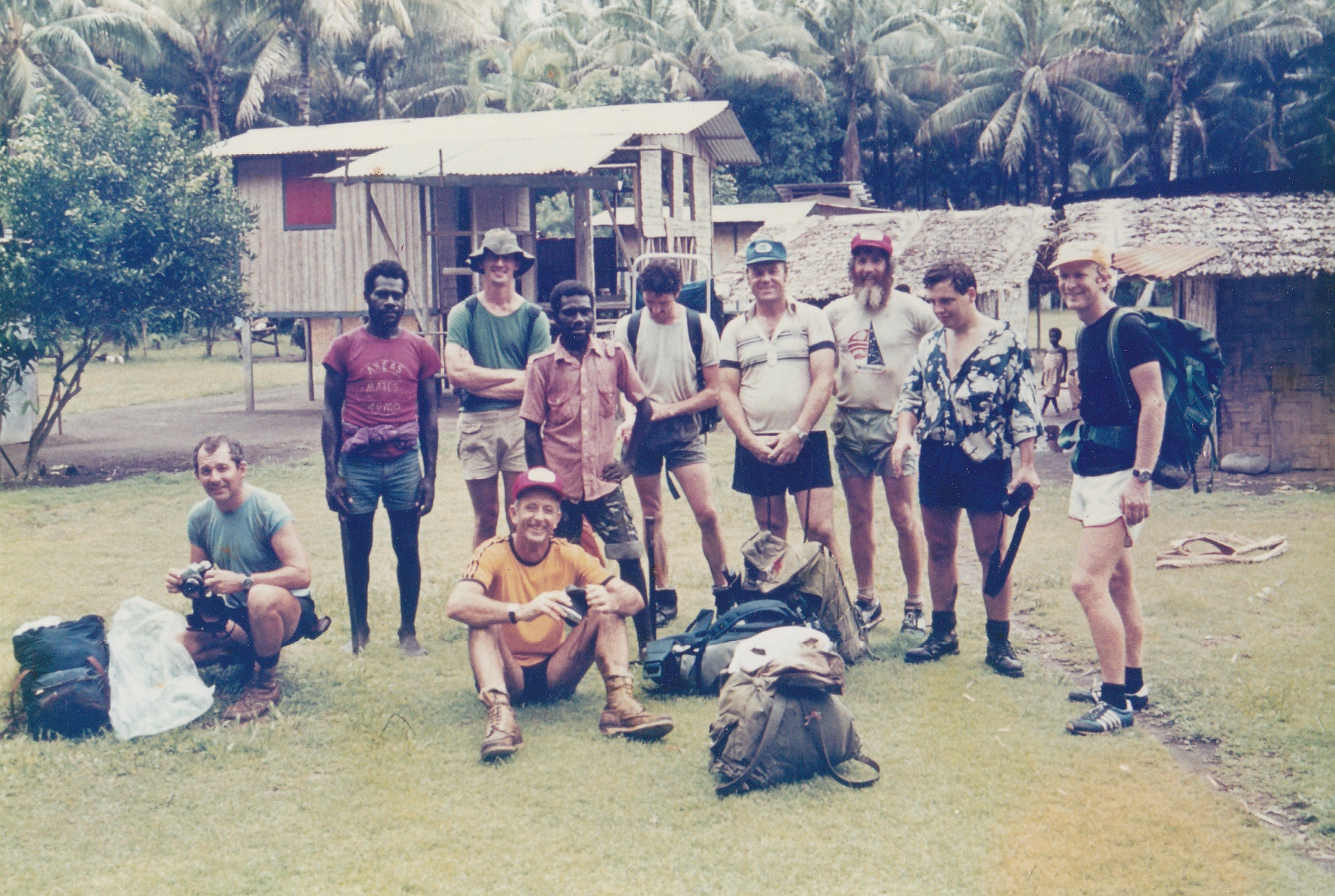
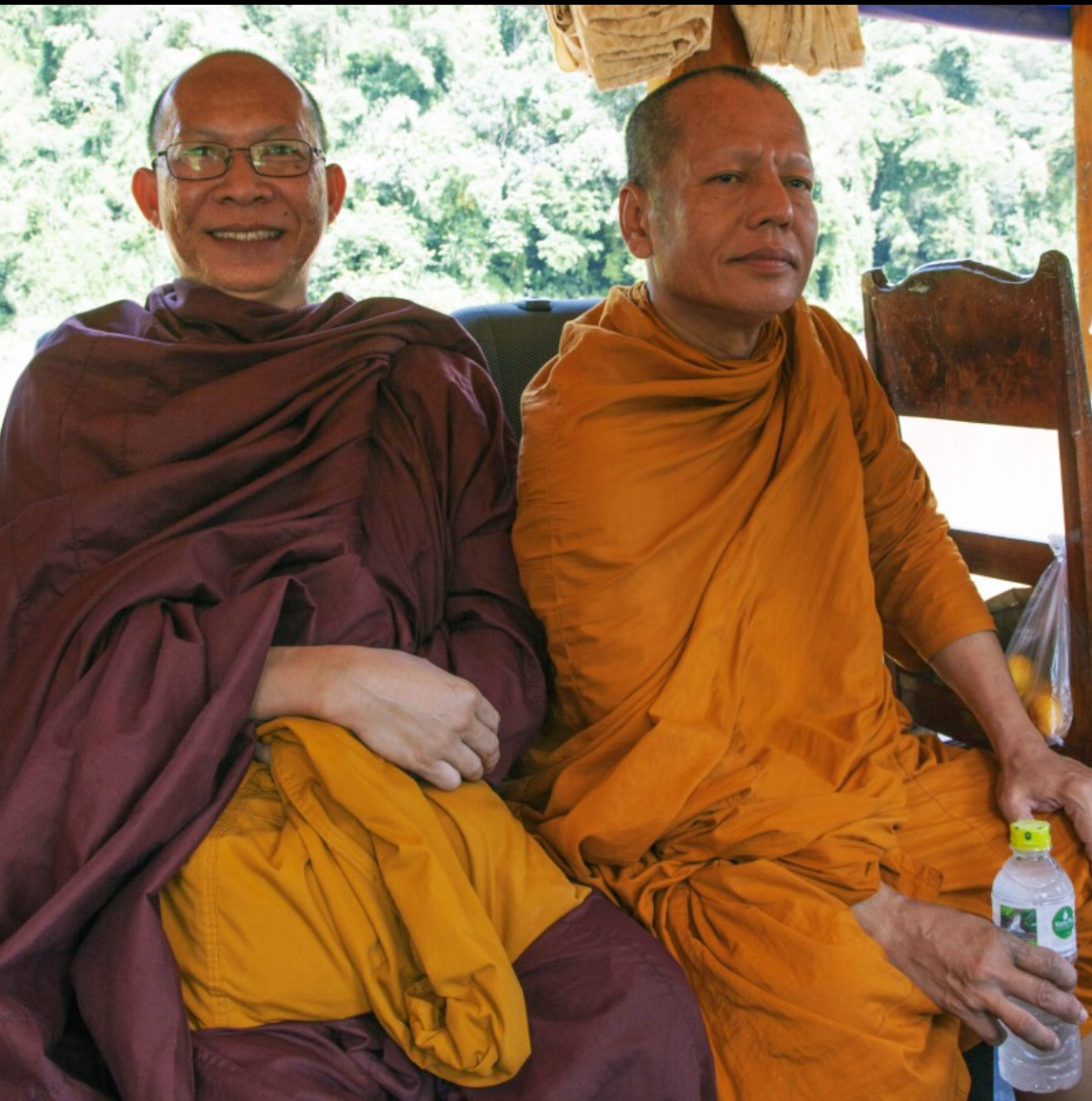
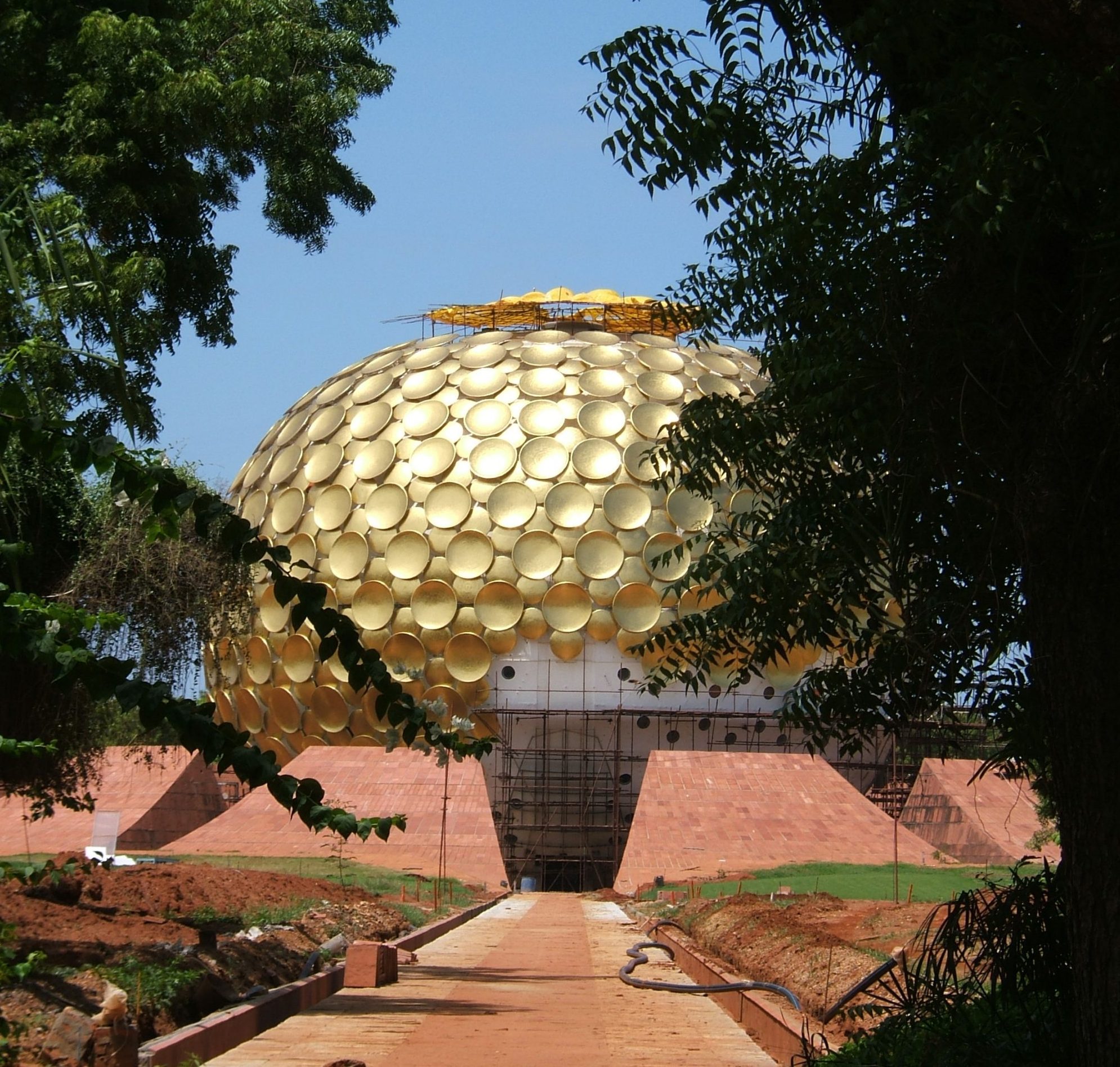
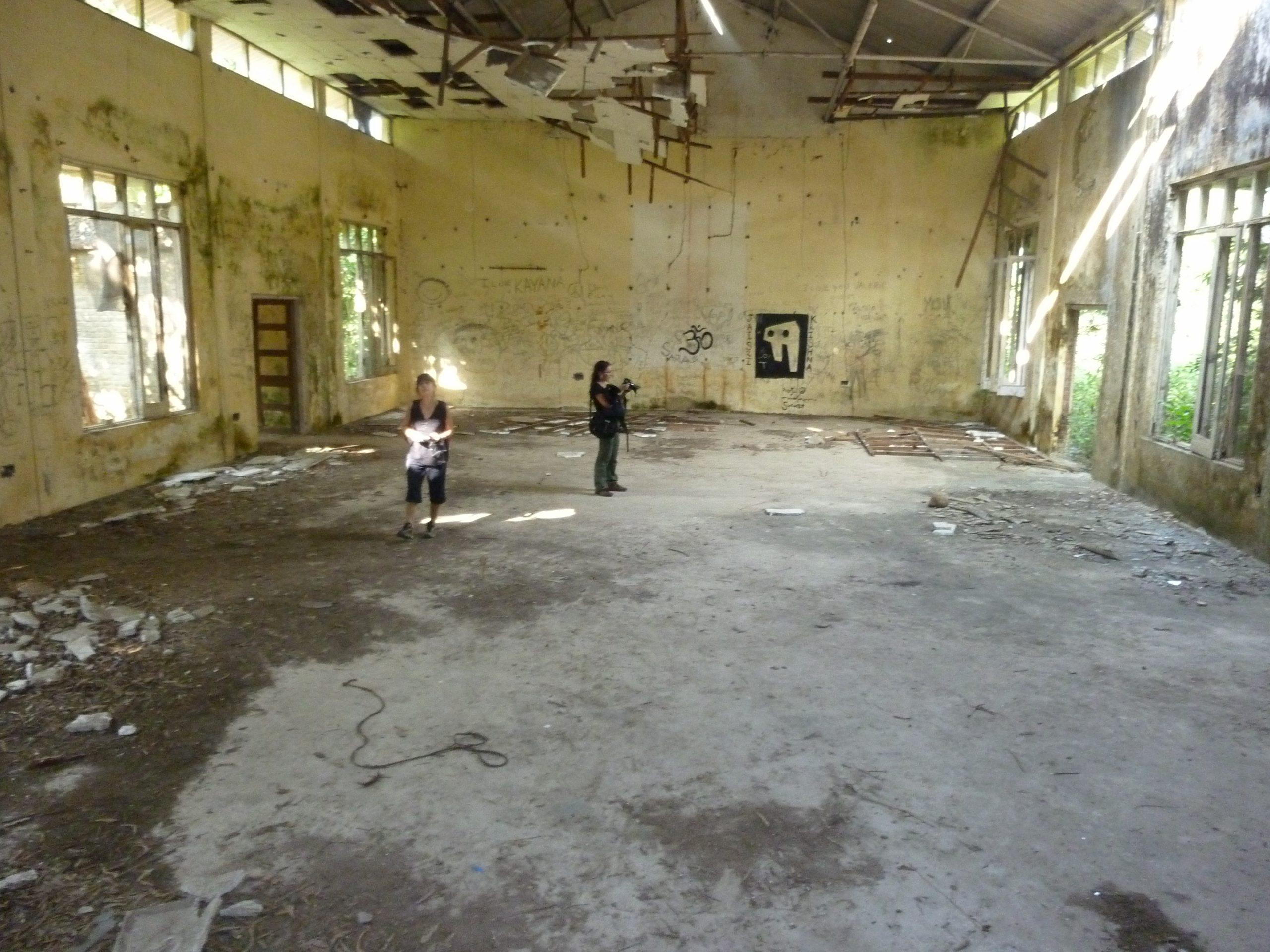
Author : Winfried Hoerr
wmhoerr@gmx.com